.png) 1 month ago
33
1 month ago
33
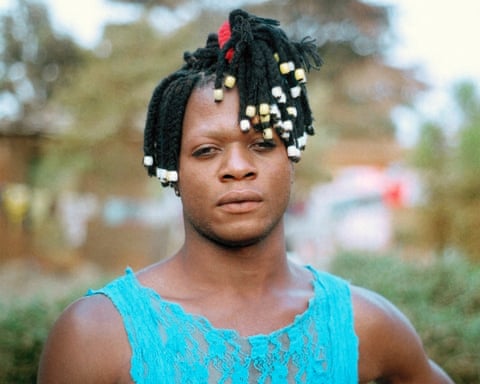
The South African photographer, whose images arise from being embedded in queer and rural communities, has been named the winner of the James Barnor prize
‘Their true inner being’ … Jenine, Kigoma, 2017. Photograph: Sabelo MlangeniThu 9 Jul 2026 08.00 CEST
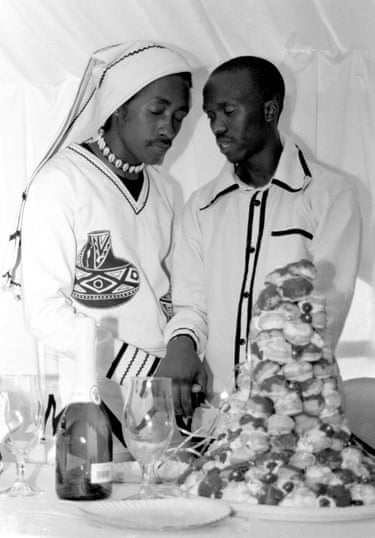
Faith and Sakhi Moruping, Thembisa Township, 2004 (from the series Isivumelwano)
South African photographer Sabelo Mlangeni has won the James Barnor prize, awarded annually to artists from different regions of Africa. He says: ‘In South Africa, a “cameraman” is more than an observer. They’re immersed in capturing the soul of the community. They’re embedded in local life, present at every community event. I was introduced to the medium in 1997, through the reconstruction of a wedding image, the first photograph I ever made.’ All photos: Sabelo Mlangeni/Courtesy Blank Projects, Cape Town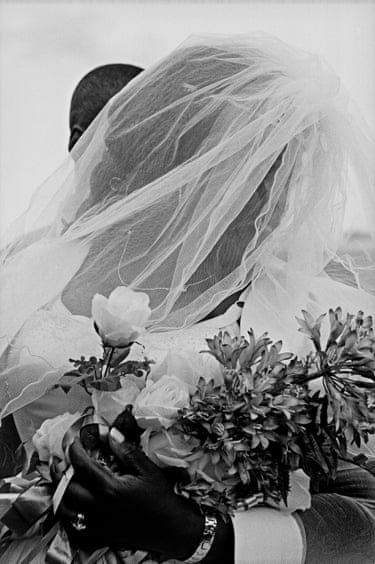
Izimbali ne Nendandatho, Collie Magagula and Jomo Mhlanga, 2011 (from the series Isivumelwano)
Writer Emmanuel Balogun: ‘The Nguni word isivumelwano represents a contract, agreement or alliance. In Sabelo Mlangeni’s context, isivumelwano is a cause for celebration and critique of the relationships we keep with others. Reflecting on previously unseen works that date back nearly 30 years, the South African photographer describes his work as magnifying “the systems we exist in (and against)”’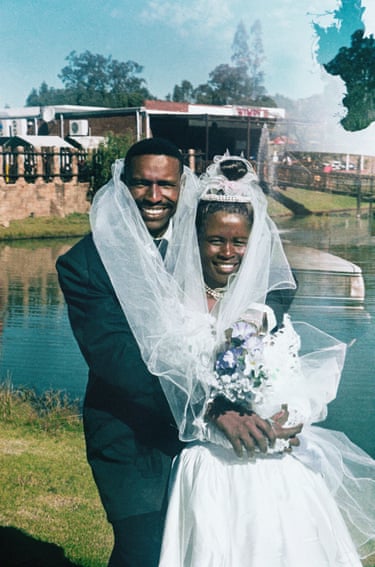
Mr and Mrs Makhubu, Newcastle, Madadeni, Wakkerstroom, 2007 (from the series Isivumelwano)
Balogun: ‘He captures unions held in churches, community halls, wild grasslands and in the shadows. These images upend inherited notions of the white wedding. The spectator is invited to observe Mlangeni’s delicate definition of love, with a nod to subversive sexual orientations and the precariousness of gender-based roles. The significance of material culture – from the wedding cake to Black folk goodly garbed in western wears – is laid bare’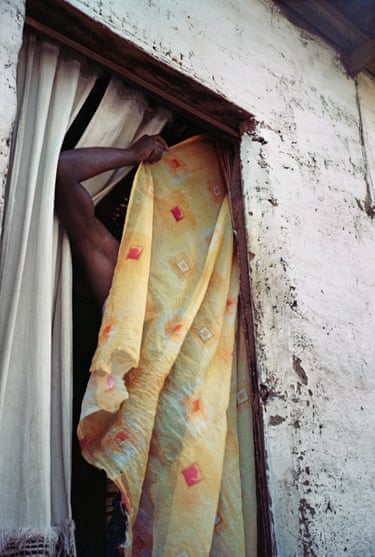
Protecting Identity, Kigoma, Lubumbashi, 2017 (from the series ‘I Have Stopped Time’ A Family Portrait)
Mlangeni is driven by his interest in the notions of community and communing, sharing intimately in their thoughts, feelings, stories and everyday lives. His practice is a continuous survey of the most challenging, beautiful and confounding aspects of the human experience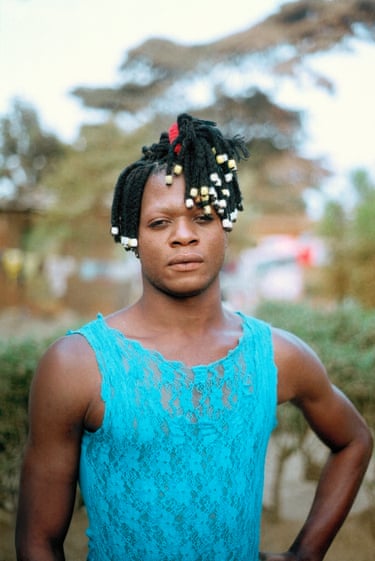
Jenine, Kigoma, Lubumbashi, 2017 (from the series ‘I Have Stopped Time’ A Family Portrait)
Mlangeni visited queer and rural communities in the Democratic Republic of the Congo in the fervent hope of capturing umoya, the isiZulu and Bantu expression for the spirit and essence of a person: their true inner being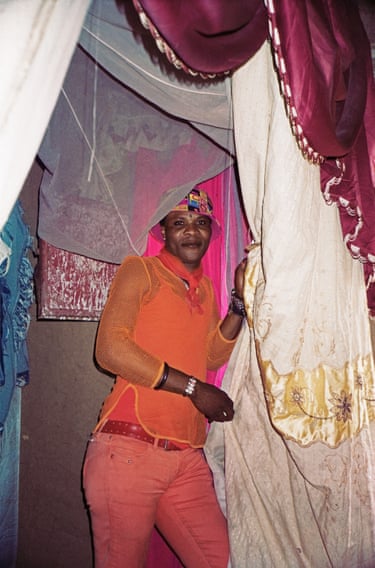
Joyce Inside Her House, Kigoma, Lubumbashi, 2017 (from the series ‘I Have Stopped Time’ A Family Portrait)
Curator Francesca de’ Medici: ‘Mlangeni’s commitment is deep-rooted, driven by a passionate and long-standing interest in the origins and meaning of chosen community, and in queer, rural everyday life. This brings him to share the quotidian and commonplace with the “invisible”, AKA the queer and discriminated communities. Time spent with them is precious beyond measure, as Mlangeni communes with those he wishes to witness and celebrate through his photography for weeks, often months’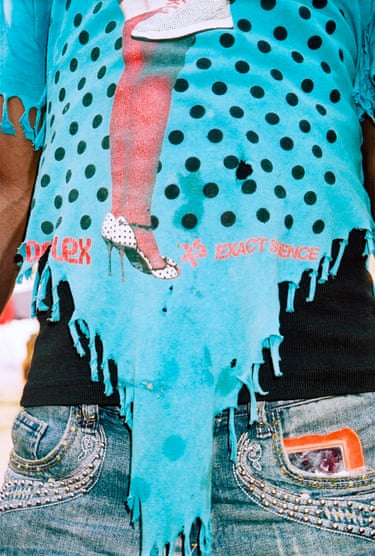
‘Exact Science’, Kigoma, Lubumbashi, 2017 (from the series ‘I Have Stopped Time’ A Family Portrait)
De’ Medici: ‘This immersion is a practice of deep devotion, empathy and love. By being welcomed into these communities, he absorbs their beauty and joys as much as their challenges and strife’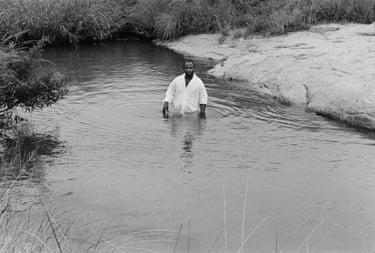
Mfundisi Ndlangamandle eFernie, 2002 (from the series Umlindelo wamaKholwa)
Umlindelo wamaKholwa explores the spiritual identity of those involved in two Zionist churches in Johannesburg and Driefontein. Unrelated to Jewish Zionism, the 20th-century protestant faith-healing movement is South Africa’s largest popular religious movement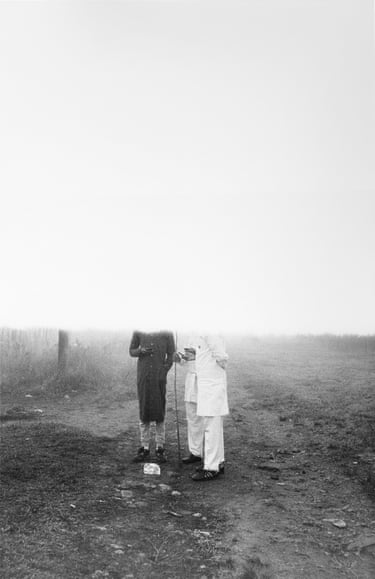
A Morning After Umlindelo, 2016 (from the series Umlindelo wamaKholwa)
Mlangeni is part of the Zionist church and has spent many years in its congregation. As with most of his series, his respectful place within the community lifts the photographic boundaries of observer and subject, allowing him to capture authentic moments. Within this body of work, Mlangeni focuses on the individuals and their relationships with belief. An experience of waiting is present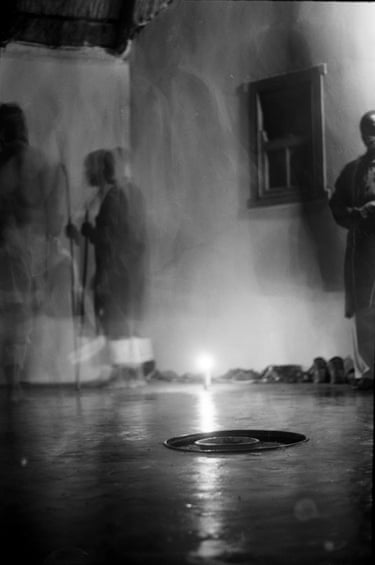
Imfihlakalo, New Year’s Eve, Driefontein, 2015-16 (from the series Umlindelo wamaKholwa)
The title refers to a night-prayer vigil, where the community comes together to pray and stand in solidarity for awaiting spirits. In this time, friends are made and beliefs are supported, conveying how community is ‘forged through the experience of waiting together’, as the artist puts it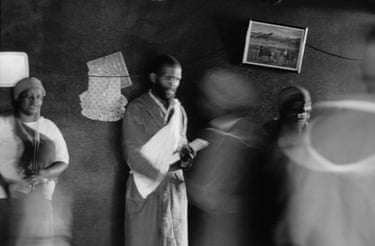
Umkhuleko Wabagulayo, Mama Khoza, Mfundisi Mathebula, KwaNyandeni, 2007 (from the series Umlindelo wamaKholwa)
Working largely in black and white, Mlangeni has built his practice around intimate photographs that draw out the inherent beauty in the ordinary. For more information on the James Barnor prize, the winner of which was announced at Arles, visit the websiteExplore more on these topics