.png) 3 months ago
56
3 months ago
56
Star Wars, with its fondness for grand emotional crescendos, mythic reversals and violent turns of fate, is perhaps cinema’s purest example of space opera. Even the oft-derided prequels, those overheated tales of democracy collapsing, forbidden love and angst-ridden space monks, are intensely Wagnerian. The Mandalorian and Grogu, despite being a warm, funny, rollicking tale of outer rim adventures, ingenious aliens and surprisingly touching surrogate fatherhood, is not really on that scale. Which is probably why it’s getting such a lukewarm reaction from critics.
This is a movie that zips along pleasantly, offers up plenty of cute “Baby Yoda” moments, delivers more than enough badass Mando action sequences, and even quietly reimagines what some of its most infamous alien creatures are capable of as a species. It is not so much space opera as cosmic picaresque, wandering frontier serial, intergalactic side-quest cinema. And that’s just not what we’re used to after the best part of 50 years of Star Wars on the big screen. Here’s what makes this new adventure so different from what came before.
Streaming vibes, lowered stakes and the death of cinematic urgency
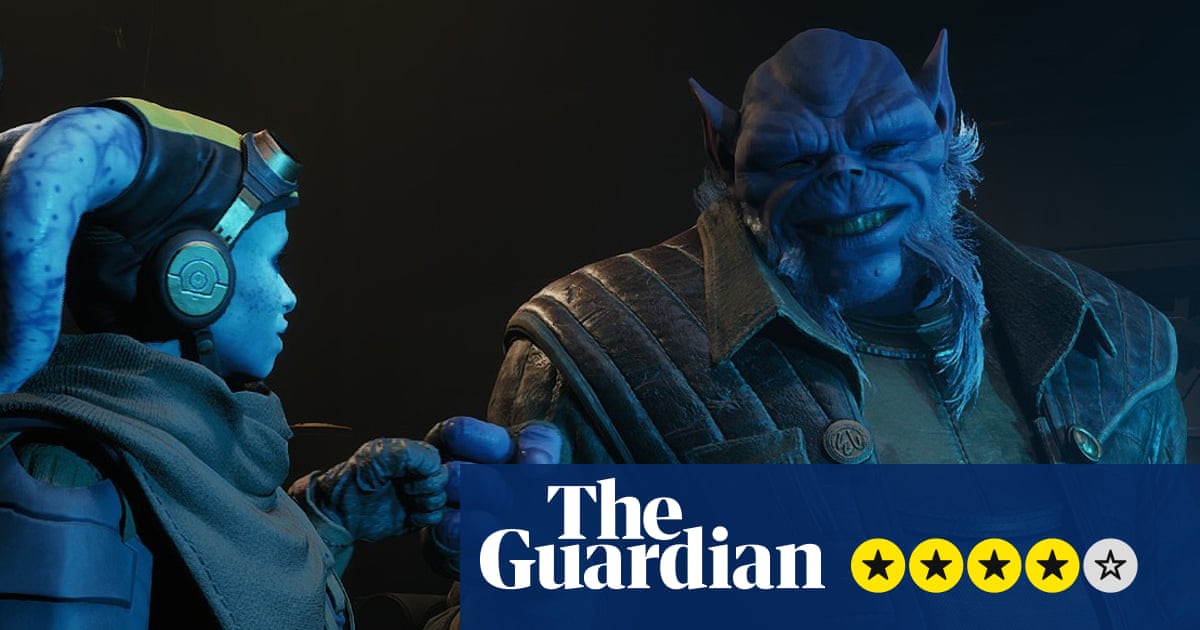
Where Star Wars once gave us Darth Vader revealing himself as Luke’s dad, and Kylo Ren stabbing poor Han Solo through the chest with a lightsaber, The Mandalorian and Grogu starts out by revealing that our favourite space duo are now essentially freelance subcontractors doing odd jobs for space bureaucrats. Recruited by New Republic Col Ward (Sigourney Weaver), their first mission is to track down Jabba the Hutt’s son Rotta the Hutt, who has become entangled with the nefarious Hutt twins and the wider criminal chaos around his father’s old crime syndicate.
There’s much to enjoy here if you enjoyed The Mandalorian’s wide-angled approach to Star Wars. We get our first glimpse of the swampy Hutt home world of Nal Hutta on the big screen, and some fabulous fight scenes on Shakari, where Rotta (voiced by Jeremy Allen White) has become the cheerfully enslaved local gladiatorial hero. But there are no Sith, no Jedi (except for Grogu, arguably), no prophecies, no galaxy-ending threats and no “chosen one” mechanics anywhere.
The suspicion is that the shelved fourth season of The Mandalorian would have looked pretty similar to this final film, had it not been for the Hollywood writers’ and actors’ strikes of 2023. Does this matter? It really depends on whether you still want Star Wars movies to arrive like sacred cinematic scripture descending from the heavens, or you’re happy watching a taciturn space dad and his tiny green chaos goblin son drifting around the galaxy.
The Hutts are no longer just giant space slugs, or even exclusively evil
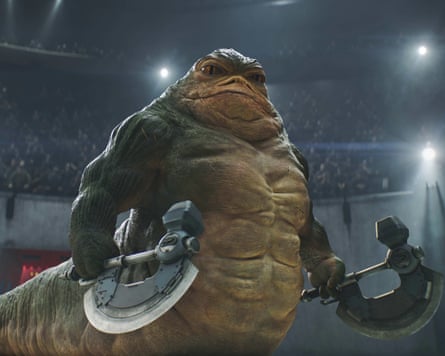
Here’s a genuine shift in big screen Star Wars dynamics, albeit one that’s pretty niche. Director Jon Favreau presents the Hutts as fully fight-capable creatures, with Rotta in particular a seriously buff specimen for a giant slug monster. It also turns out that Rotta is a bit of a dude. Naive enough to let himself be tricked into fighting every night for someone else’s gain, yes. But also determined to escape from the shadow of his father’s nefarious criminal empire and become his own Hutt. This, in recent Star Wars terms, may actually count as plot development more radical (or at least more original) than the discovery of yet another secret Jedi/Sith bloodline. At the very least, it’s proof that the saga can still expand its universe sideways, instead of repeatedly trying to blow bigger and bigger holes through the ceiling of its own ever-grander mythology.
The galaxy far, far away has become a bureaucratic cleanup operation
Back to the New Republic. In this relatively calm and boring period between the fall of the Galactic Empire and the eventual rise of the First Order, they clearly haven’t got a whole lot to do. Where once the Rebel Alliance fought desperate battles to save the galaxy from fascist annihilation, the new good guys’ duties are now largely limited to keeping an eye out for scattered imperial remnants and taking them out quickly if they pop up again. This worked fine on TV, because The Mandalorian gave Star Wars nerds the chance to luxuriate in all the strange corners, background creatures and administrative aftershocks of George Lucas’s universe. On the big screen it can occasionally feel a little like watching the galaxy’s most expensive municipal maintenance programme.
The Mandalorian creed has quietly stopped being a religion
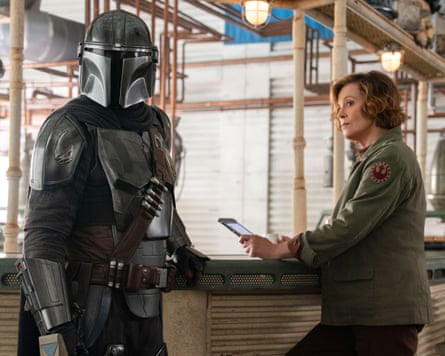
One of the more subtle things The Mandalorian and Grogu does is dismantle the rigidity of Din Djarin’s belief system. Early seasons of The Mandalorian treated the “no removing your helmet” rule with near-mystical severity. “This is the Way” sounded less like a cultural custom than a binding galactic blood oath. Now? Din’s approach feels considerably more pragmatic. When the Hutt Twins forcibly remove his headgear, his response is essentially to shrug and point out that he probably won’t feel especially dishonoured if they happen to die shortly afterwards. Which, naturally, they do.
That’s actually a pretty major shift for the character, albeit one that’s been coming for a while on TV. The creed no longer feels like an inflexible religious doctrine governing every aspect of Mando’s existence. Instead it resembles something messier and more recognisably human: a personal code being negotiated in real time.
What if Grogu is now bigger than Star Wars itself?
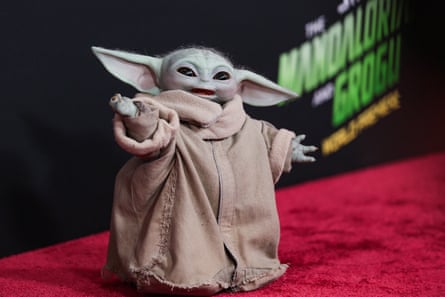
If The Mandalorian and Grogu is the future of Star Wars – and early box office suggests that future may not yet be roaring out of hyperspace with quite the confidence Disney hoped – the new film hints this could be both a triumph and a problem. On the one hand, Baby Yoda is cute, weird and emotionally legible enough to transcend all the usual arguments about Jedi lore, sequel canon, and whether anyone still knows what “balance in the Force” means. He just is, which is why Favreau is able to get away with an entire 15-minute sequence near the end of the movie in which Grogu potters about on Nal Hutta waiting for Mando to recover from giant albino dragon poison. On the other hand, the saga stops being a mythic engine and starts becoming a delivery system for Baby Yoda reaction shots. The Force, the Skywalkers, the Republic, the Empire, destiny, rebellion, tragedy, redemption: all of it risks becoming mere scaffolding around one small puppet.
Perhaps that is why The Mandalorian and Grogu feels so unorthodox for a Star Wars film. It is not really asking what happens next to the galaxy. It is asking whether the galaxy still matters, so long as Grogu is there to blink adorably in the middle of it. For nearly 50 years this saga has been powered by destiny, rebellion, fallen fathers, chosen sons and the endless cosmic wrestling match between light and dark. Now its most bankable hero is a tiny green child who says almost nothing, mostly wants snacks and can bring an entire franchise to a halt simply by looking mildly confused. That may be delightful. It may even be exactly what Star Wars needs.