.png) 2 months ago
52
2 months ago
52
Centuries before Donald Trump started playing around with the world economy, “tariff” was a levy paid to Spain by ships using the strait of Gibraltar; it was named for Tarifa, the town near the strait’s narrowest point. France’s kings had long dreamed of a waterway linking the Atlantic to the Mediterranean: as well as depriving the Spanish monarch of easy money, it would save ships a long voyage around Spain and Portugal, risking storms and pirates.
From the Atlantic, vessels can reach Toulouse from the Gironde estuary (on the Garonne River), but not until the 1660s did anyone have a viable plan for the remaining 200km to the Med. Considered one of the biggest engineering feats of the 17th century, Pierre-Paul Riquet’s Canal du Midi (finished in 1681 and called the Canal Royal du Languedoc until the revolution) rewrote the history of transport and commerce in the south of France – for centuries it carried wheat and wine, people and post.
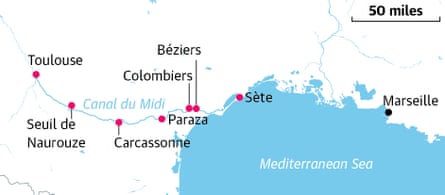
In 1996, Unesco added the canal to its world heritage list, citing the way Riquet “turned a technical achievement into a work of art”. Today, the canal attracts more than 70,000 visitors a year, almost three-quarters of them from outside France. From La Ville Rose (as Toulouse is known) to the sea, here is how to enjoy it, however you decide to travel.
Toulouse-Carcassonne
The canal south-east of Carcassonne sees the most tourists; the Toulouse side has fewer attractions, but is enjoyably quieter, all sunflower fields and old windmills. In centuries past, horse-drawn barges would make their first stop at Négra lock; it’s a good place to clock the unusual oval shape of the lock basins, which helps the stone walls withstand water pressure. The inn that served passengers lunch is now a Locaboat rental firm, which hires out barges sleeping from two to 12.
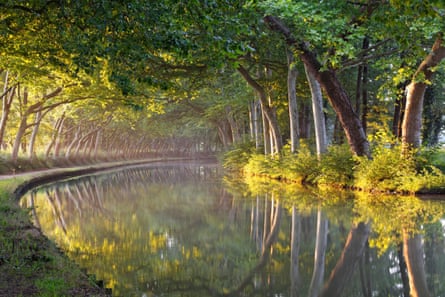
The technically minded will enjoy the Seuil de Naurouze, the canal’s highest point, where it crosses the watershed between the Atlantic and the Med. Key to Riquet’s plan was feeding the canal with water channelled from the Montagne Noire, north-east of here. It’s a peaceful spot, with an avenue of plane trees leading to an obelisk commemorating the engineer. A short walk away, Le Pas de Naurouze offers a meaty (this is south-west France) but excellent set lunch for €23.
Eight miles on is Castelnaudary, home of rib-sticking bean cassoulet, invented while the town was besieged by the English in 1355: try it at the renowned restaurant Chez Marty. The coming of the canal boosted this town’s fortunes: waterside terraces on its lake-like Grand Bassin have an expansive feel, and a 10-minute climb to the restored 17th-century Cugarel windmill offers great views. Across the water, Le Grand Bassin is, in high season, an eco-friendly holiday let sleeping 15, but in shoulder season it lets out individual en suite rooms from €90. Handy for the station and boat jetty, it also offers cycle storage and repairs, and luggage transfers.
Carcassonne – and on
Much has been written about Carcassonne’s medieval citadel, but it is best avoided in the summer season. The canal grows more attractive from here though, even if the towpath gets bumpier. Sleepy villages in golden stone include Trèbes, between the canal and the Aude River, with its 13th-century church, marina and Sunday market. A lovely walk south-east takes in the Domaine des Pères olive oil mill (book visits online), and a three-lock flight on which boats drop seven metres of their 80-metre descent to the Mediterranean.
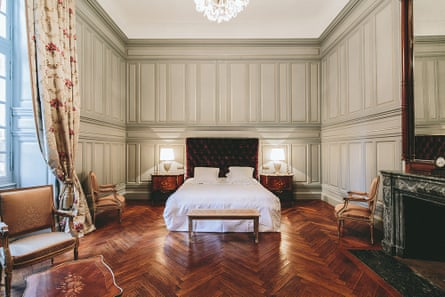
Paraza, 25 miles on, is an arty village, home to several studios and the unfortunately named CLAP gallery (Centre Local d’Art Parazanais). Château de Paraza winery offers tastings – and luxury castle rooms for a splurge. Cheaper options include Domaine Méditerranée (from €85) with a pool and dinners on request.
Toulouse is just under 200km from the sea, but the canal’s many loops and meanders add another 40km. One loop, just after Paraza, runs to France’s first canal aqueduct, the 1676 Pont-Canal de Répudre, the parapets of its one-arch bridge spanning the river of the same name.
Escape the canal
There’s a holiday feel to the route after Capestang. The countryside is more open, there are more pleasure craft on the water, and plenty of attractions.
It’s worth detouring a few miles to the village of Saint-Chinian, in Languedoc’s oldest winemaking area. It has narrow streets, shady squares and a Benedictine abbey, but also lots of ways to get active. Rock climbers can tackle any of 15 routes up the magnificent west-facing Notre-Dame cliff nearby. There’s kayaking on the Vernazobre and Orb rivers, horse riding and cycling among the vines on Oenovélo 1, a mostly off-road bike route that links Saint-Chinian to the canal at Colombiers (see below). This makes a nice change if you have been riding the towpath for days.
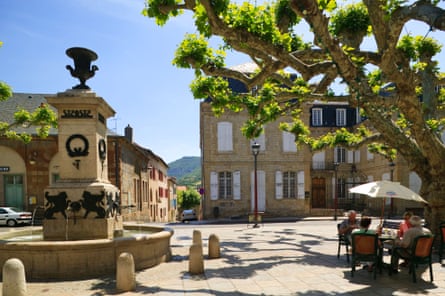
South of here is the circular, spiral-built village of Puisserguier, topped by its 1,000-year-old battlemented castle (entry free but hours can be erratic; try +33 6 62 14 70 96). Then it’s back to the canal at Capestang, with its chunky stone bridge and great market (Wed and Sun) by the tall Saint-Étienne church. There’s good food at Le Pourquoi Pas, right by the canal a few miles west, while La Pause Sous le Pin (doubles from €90 B&B) is a welcoming B&B with a pool and garden, five minutes’ walk from the centre.
To Béziers and the coast
The area around the ancient village of Colombiers used to be classic Insta-worthy Canal du Midi – curved stretches of waterway reflecting rows of tall planes – but severe canker stain infection saw about 1,600 trees felled. Many have been replanted, though, and are now thriving. Before Colombiers, there are two sites of note. The Oppidum d’Ensérune is a Gallic hill fort dating from the sixth century BC (€9 including museum). A scenic walk away (and free) is the world’s oldest canal tunnel, the Malpas, bored through a ridge. Finished in 1680, it takes just a few minutes to pass through but is a unique experience for boats, bikes and walkers.
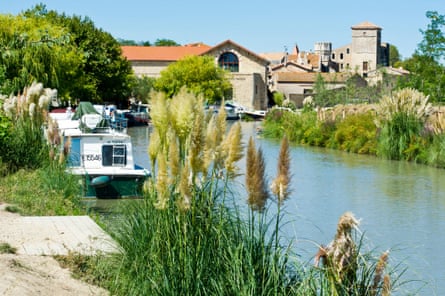
Colombiers is the place to take to the water if you haven’t already. Sunboat offers permit-free day boats for 4-12 people from €35, all with cushions and sunshade; larger ones have a Bluetooth speaker and table for musical lunches. There are also rowing boats, kayaks and paddleboards to hire – and guided sightseeing trips. Colombiers’ 12th-century chateau is mostly closed for restoration, but there are guided tours on Wednesdays. Check out the wine cellars, glazed in multicoloured metro tiles.
Just outside Béziers is maybe the canal’s most remarkable sight: the “nine locks” of Fonseranes, allowing boats to drop 21 metres. It’s a lively spot, with plenty of spectators on the banks. Boats now enter and leave via basin seven, so the flight is six locks, but it’s impressive all the same.
And relax …
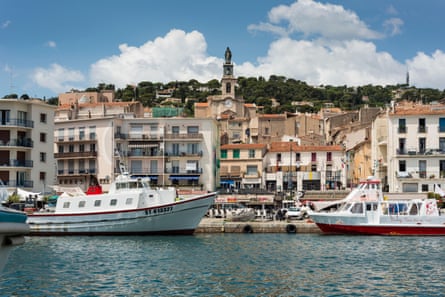
The canal empties into the Étang de Thau at Les Onglous, but boats would then cross the lagoon to unload at Sète harbour, which Riquet also designed. Sète is a pretty, lively port town, with train links on to Marseille and Avignon or back to Toulouse. It has canals of its own, sandy beaches, a covered market and traditional water jousting tournaments (great fun to watch). Les Terrasses de Saint-Clair is a peaceful B&B with three bedrooms (from €130), pool and boules court on the hill between the port and lagoon. After a canal odyssey of any kind, Séte makes a great place to stay still for a few days.
Find information about this year’s events at canal-du-midi.com