.png) 2 months ago
49
2 months ago
49
Perhaps attitudes are not quite as parochial as they once were, but it remains true that, in England at least, the Africa Cup of Nations is discussed less as a tournament in its own right than in terms of what it means for the Premier League.
There will be the usual harrumphing about why the tournament is played in the middle of our season, but the Confederation of African Football has tried to satisfy European clubs only to be thwarted by Fifa and the increasing demands of the calendar.
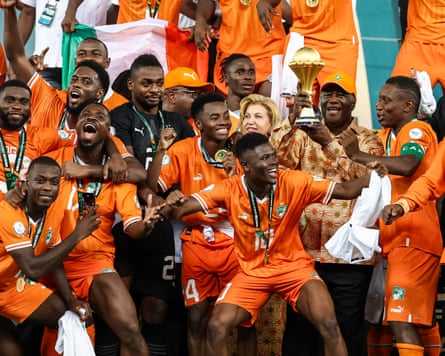
Scheduling, it must be acknowledged, is not a strength of Caf. Not since 2012 has a Cup of Nations been held in the venue and at the time originally planned: 2013 was switched from Libya to South Africa because of the civil war; 2015 was moved to Equatorial Guinea when Morocco withdrew from hosting over Ebola fears; 2017 was moved to Gabon because of the turmoil in Libya; 2019 was moved from Cameroon to Egypt because of construction delays; 2021 was played in Cameroon, but not until 2022 because of Covid; and 2023 was initially scheduled for Côte d’Ivoire in June/July only to be shunted back to January/February when somebody at CAF belatedly looked at the weather charts and accepted trying to play a tournament in the west African rainy season was nonsensical.
However absurd the idea of playing tournaments regularly in the European summer – is the plan really never to play the tournament in west Africa again? – that remains official policy. The 2025 Cup of Nations was initially set for Morocco in June and July. But then Gianni Infantino invented his extended Club World Cup and Africa was forced to push back its tournament to start on 21 December.
For somebody who said before the last World Cup that he feels African, Infantino has an odd way of showing it. Fifa’s president still plays the old anti-colonial tune so beloved of João Havelange to rally his support base in Africa, but has seemed just as unconcerned by the lack of a slot for the continent’s tournament as he was by the deaths of thousands of migrant workers in Qatar.
His proposed $100m 20-team African super league, a dubious plan given how it would have trampled over traditional rivalries and pre-existing competitions, ended up as a one-off, eight-team tournament in 2023 (it has never officially been abandoned, but there are no references to it on the Caf website).
Fifa usually insists clubs release players 14 days before a tournament, but for this Cup of Nations that has been reduced to six, with clubs encouraged to find individual solutions if that doesn’t suit them. The disdain for Africa is palpable.
Patrice Motsepe, the South African president of Caf and a key Infantino ally, did attend Friday’s World Cup draw despite Donald Trump’s attempts to exclude South Africa’s president, Cyril Ramaphosa, from next year’s G20 summit. Trump, who played a major part at the draw, boycotted a G20 leaders’ summit in Johannesburg in November, claiming South Africa’s white minority population are persecuted.
With the June/July slot closed to Africa, it was suggested the tournament should return to the opening it had occupied in January/February. But that posed its own problems. Between 1996 and 2012, the Cup of Nations was held in the January/February of even numbered years. Why every two years? Because when the Cup of Nations began in 1957, Africa was 13 years from having a guaranteed place at the World Cup and it was the only way to ensure regular competitive football.

With only five sides qualifying for the World Cup until the latest expansion, the Cup of Nations was still the best way of generating revenue for the other 50 Caf members. If Europe objects to that, when so many Africans play for European clubs, it needs to find some other way to fund the continent’s football.
There was a sense that in World Cup years it was overshadowed by the global tournament. In addition, Fifa regulations oblige clubs to release players for only one international tournament per year. In a World Cup year, European clubs would be within their rights to refuse to let players go to the Cup of Nations, with the seep of the expanded Champions League into January increasing their reluctance to release them.
The compromise is this December/January competition, which can be classed as a 2025 tournament to prevent clubs refusing to release players, while also falling in the winter break of most European leagues. Which is why, with only one Premier League fixture, you can fill your Boxing Day watching Zambia v Comoros, Egypt v South Africa, Morocco v Mali and Angola v Zimbabwe.
Premier League clubs will be affected, although Arsenal and Chelsea will not have any representatives at the Cup of Nations. Sunderland could be without as many as seven players, the most significant the indefatigable Democratic Republic of the Congo midfielder Noah Sadiki and the Mozambique left-back Reinildo, particularly as his back-up, Arthur Masuaku, will be with the DRC. Dennis Cirkin’s return to training has come at just the right time.
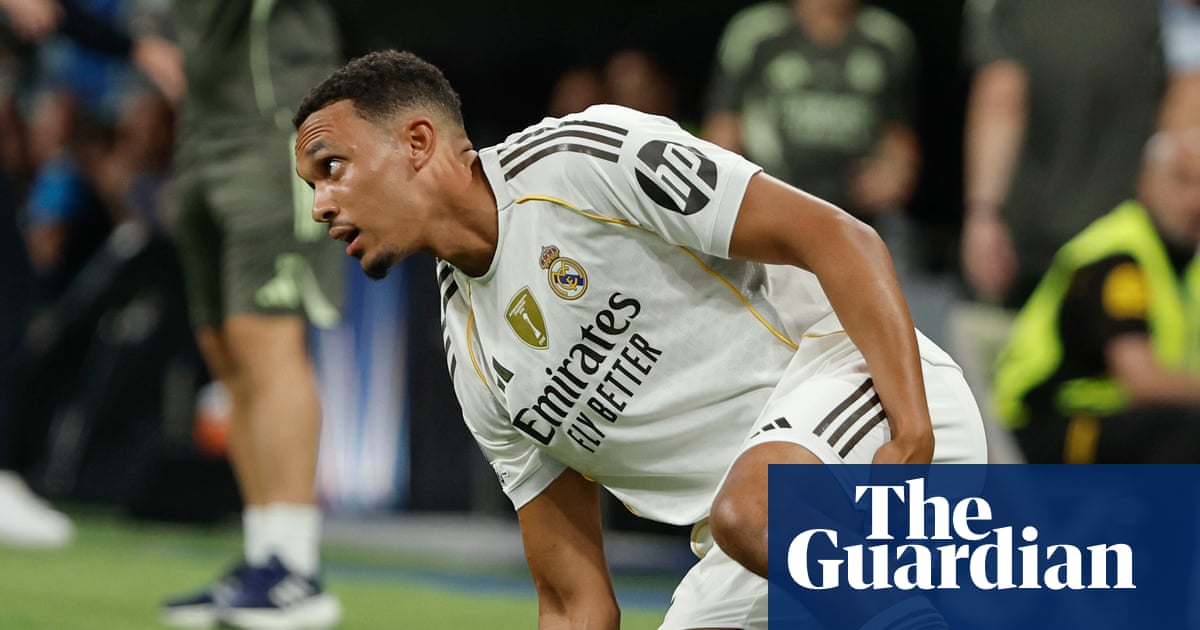
The loss of Mohamed Salah looks less significant for Liverpool than in previous years, while his Egypt teammate Omar Marmoush has started two league games for Manchester City this season. Manchester United’s attacking thrust will be affected as Amad Diallo and Bryan Mbeumo join up with Côte d’Ivoire and Cameroon respectively, West Ham will have to give up both wingbacks in the DRC’s Aaron Wan-Bissaka and Senegal’s El Hadji Malick Diouf .
The creativity of Diouf’s compatriots Iliman Ndiaye and Ismaïla Sarr will be missed by Everton and Crystal Palace, and the Nigerian Alex Iwobi’s calm passing by Fulham. The failure of Ghana and the Gambia to qualify, though, means Mohammed Kudus, Antoine Semenyo and Yankuba Minteh will all still be available for Tottenham, Bournemouth and Brighton respectively.
But this isn’t a story about the Premier League. It’s a story about African football and how, for all Infantino’s rhetoric, it has been shunted to the margins, about how, as greed expands the fixture list, it has had to scrabble to find a nook into which it can almost apologetically squeeze in its flagship tournament.