.png) 5 hours ago
9
5 hours ago
9
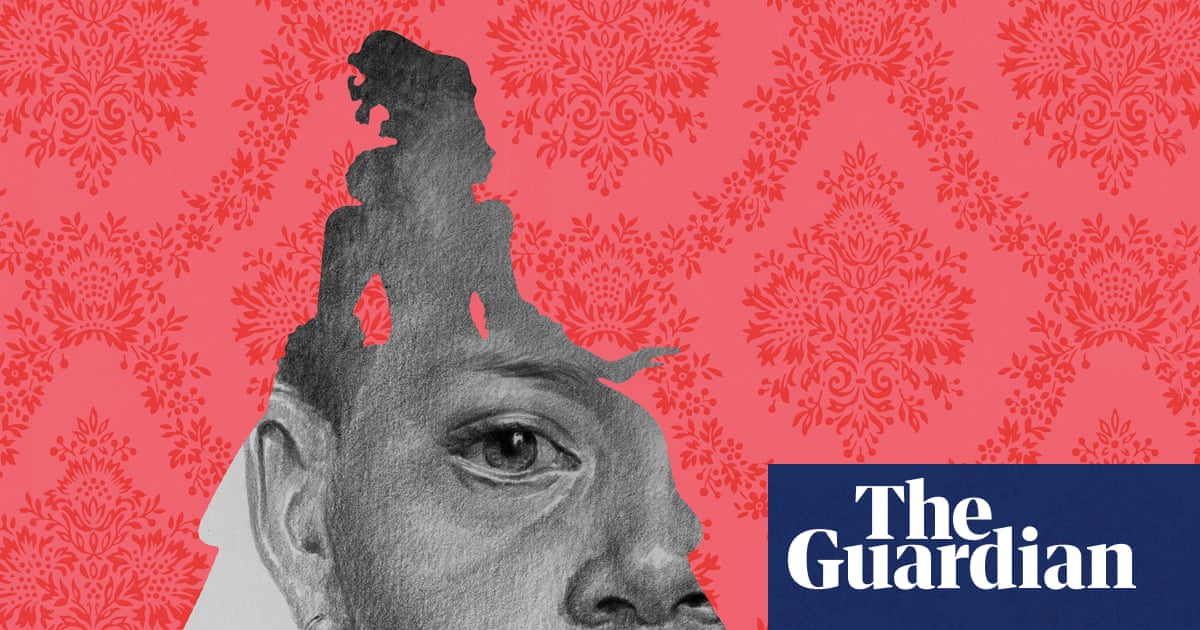
The most interesting chapter in Anthony Scaramucci’s All the Wrong Moves is the one where the hedge funder turned podcaster goes to work for Donald Trump. It’s summer 2017, and he’s been given the job of comms director, which he doesn’t know how to do, but he and Trump think it’ll work out because they’re both from New York. Or maybe he took it because he had “Potomac fever”, which afflicts Wall Street financiers who find themselves on the riverfront in Washington DC thinking they know how to run a country just because they’re “full of power and judgmental insight … about to fix everything”.
This appointment lasts only 11 days, not even enough time to be truly tainted by Trump’s first term, though it is enough time for Scaramucci to miss the birth of his son. The account is a mea culpa soup, with the author full of regrets for his hubris, his impulsivity, his “pride, egotism and asinine stupidity”, the fact that, despite the clear-sightedness bestowed by his humble beginnings, he’d come to assume the collective biases of the rich people he hung out with.
But what he doesn’t address is the fact that it was quite plain by then who Donald Trump was. Scaramucci himself identifies the beginning of Trump’s explicit use of racism and the politics of hatred, not in his first taboo-breaking statement that Mexicans were bringing drugs and rapists into the US (2015), but with the Obama birther conspiracy, which had been going on for years. Irrespective of all his pondering as to whether Trump was symptom or cause of a broken US, Scaramucci knew when he joined the White House that he was reporting to a racist, a chancer, an egomaniac and a liar. Bluntly, a person with decent values would not have joined this administration.
That doesn’t invalidate his analysis, but it does flatten it. The US is all about money, he tells us; the founding fathers were actually the investing fathers; anything not obviously a decision motivated by money is the unintended consequence of one. The very United States was “unified – by money”, because that was all Alexander Hamilton was thinking when he created a central bank. The fact that half the English-speaking world could sing the thousand other things Hamilton was thinking in a close harmony hasn’t occurred to the author, who can’t have seen the musical. It makes his potted history of the US a little brutish, and his organising principle – that the rot started to set in from Clinton onwards, when leaders lost their “moral purpose” – contradictory. If there was never any value higher than money, how can Clinton’s purpose have been any less moral than Franklin D Roosevelt’s?
All of that is just backdrop to the book’s fatal flaw. Scaramucci details the three “catastrophic” errors that have created the US’s current doldrums, and this is all wisdom he came about the hard way, through wrong moves of his own, in the board room, in the situation room, in Trump’s inner circle. These were: privileging China during the globalisation era; waging war with no corresponding tax hikes, post 9/11; and bailing out the banks.
It’s hard to disagree with any of it. If the world’s manufacturing all moves to a place where wages are lower, you correspondingly destroy the employment prospects of your own workforce. But these are arguments that were diligently made at the time; by political insurgents from the right, during the 1992 election; by protest movements on the left, in the so-called Battle of Seattle of 1999, and in anti-globalisation demonstrations around the world subsequently.
Scaramucci writes that he should have taken this more seriously, they were right, he was wrong, but never reflects on how it came to be. It turns out that without institutional muscle – peculiar for Scaramucci to tell the entire history of his nation’s economy with only the most fleeting mention of Ronald Reagan’s union-busting – mere logic and reason aren’t enough, until it’s too late. He similarly tells the story of the war in Iraq as a cashflow snafu without considering whether anti-imperialists and pacifists might have a point, sometimes, and the story of the 2008 bailouts with only the swiftest nod towards the Occupy movement which, again, was broadly correct in its analysis.
It’s consequently a book of constant catch-up, a man who thought he knew it all, slowly surrendering to more sophisticated analyses when it is too late now anyway: China no longer looks to the US for its place in global markets; American wars are no longer waged with long-term strategic aims if patchy funding streams, but impulsively; and Wall Street no longer calls the shots, techbros do. He nods towards that last reality with a suggestion at the end to break up Silicon Valley monopolies, but never thinks seriously about how far from Kansas the world has actually strayed.
It’s nevertheless quite engaging, and no more or less infuriating than it would be if, say, Alastair Campbell (Scaramucci’s UK opposite number – both coming out with hard-boiled political realism on their Rest Is Politics pods) penned an excoriating critique of the war in Iraq. But it’s hard to choke down an argument whose kernel is “sorry, guys, I just wasn’t listening” from someone still stuck on broadcast.
after newsletter promotion