.png) 2 months ago
55
2 months ago
55
Johanna Orth was a fun-loving, determined little girl and later a purpose-driven young woman who revelled in making a creative mess in the kitchen. Her parents, Inka and Ralph, chuckle quietly as they remember the stacks of batter-covered bowls, spatulas and whisks repeatedly left in the sink.
With time, Johanna’s cakes and pastries grew more sophisticated and elaborate, guided by her grandmother, Marlies, who was also a talented baker. Marlies’ own ambition of opening a cafe one day had been thwarted by the demands of motherhood and postwar Germany’s rigid gender roles.
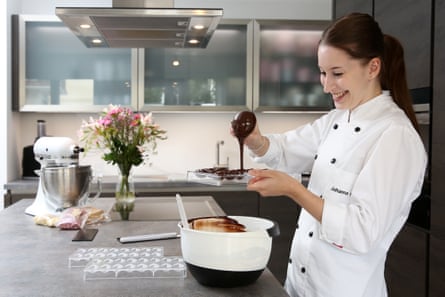
Johanna inherited the dream and worked hard to make it a reality, completing the rigorous training to become a certified master patissière who could hold her own with the rarefied global cadre of magicians of the sweet.
In 2021, aged 22, she was completing her business school training before opening her own shop named for Marlies when a freak summer deluge bore down on her home town of Bad Neuenahr, in western Germany’s Ahr valley. The river’s water levels peaked at nearly 10 metres, roughly twice those recorded during the previous record flood five years before.
On the night of 14-15 July, a panicked Johanna called her parents on holiday in Spain as the waters rushed into her ground-floor flat. As she told them her furniture was beginning to float around her sitting room, the line went dead.
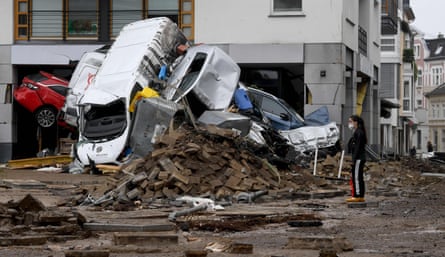
Their daughter’s body was found two days later in a parking garage, her slight frame probably carried away by the current when she tried to escape via her terrace door. She was among more than 220 people who perished across Europe in the disaster.
“That was the unspeakable night we’ll never forget, which took our beloved daughter away from us,” Inka said.
The Orths share a blinding grief that they say only other parents who have lost a child can comprehend. The residence for senior citizens that they ran was destroyed in the flood, their sense of meaning and even will to live washed away with the raging river.
For 10 weeks, Inka retreated inside their home in agony and avoided contact with neighbours, who would sometimes cross the street to avoid them and their crushing loss. Then one morning, she woke up with her first glimmer of hope since her daughter’s death.
“I wanted to understand what drove her passion,” said Inka. She started looking for a pastry academy that would enrol an amateur in her late 50s and finally found one in the university city of Ulm. After enjoying one confectionery class, she signed up for another 15 courses.
While Ralph threw himself into his work back home trying to revive their business, Inka struggled at first with the delicate arts of pulling sugar, laminating doughs and conching chocolate.
“I had tears in my eyes because nothing was working,” she said. “And then I thought: ‘Johanna, help me – give me a hand.’”
At a workshop on gelatines – “very dry”, Inka remembers – she met a talented fellow student, Marcel Reinhardt, who was just half a year younger than Johanna. They formed an instant bond and when Inka eventually told him about the loss of her daughter, he didn’t recoil at her pain.
She had found her future business partner for what would become Patisserie Johanna.
Ralph, a soft-spoken man with a knack for sales, recalls the birth of his wife’s idea for a new venture as something that quickly gave them both a sense of shared purpose, a point on the horizon to strive for.
The 62-year-old notes how much strain the death of a child puts on the parents’ relationship, with each locked in their own struggle for survival. But he said their project became something that shored up and even strengthened their marriage.
“Parents losing a child goes so completely against the natural order that we no longer had any desire to live,” Ralph said. Their connection to their grown son Max and his family and the prospect of a Patisserie Johanna pulled them back from the brink.
The couple decided to seek a spot far from the still flood-ravaged Ahr valley and settled on Hamburg, one of their favourite cities, with a vibrant urban centre and teeming tourist industry that could sustain a high-end cake shop and cafe.
Their search for the right location turned up a 700 sq metre space in the Unesco-listed warehouse district – a cavernous 19th-century cocoa storage facility made of elegant red brick. “It was perfect,” said Inka.
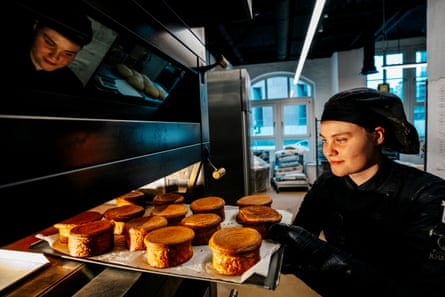
Since opening in February 2024, the business has continued to grow, with an expanding team in the open on-site kitchen, Ralph said. They now employ about 30 staff.
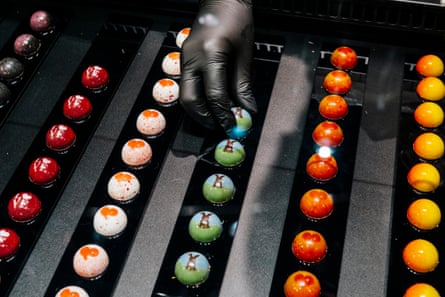
On a bustling afternoon before Easter, the seasonal pastries, chocolates and gateaux were arrayed in glass display cases, spotlit like jewels. Certificates from multiple German Chocolate Awards line the entrance, where a short red carpet welcomes customers.
And Johanna, of course, is everywhere.
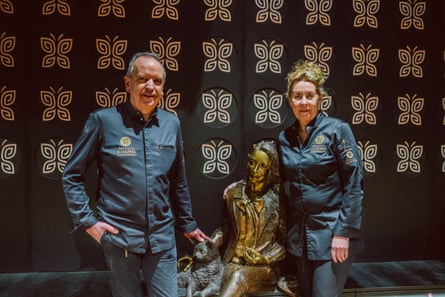
Large portraits of the striking, chestnut-haired woman with kind eyes hang on the walls. Inka and Ralph used a butterfly – a symbol they associate with their daughter’s enduring presence – as the shop’s logo. Filigree wings adorn many of the petit fours, including a special edition they offer each 1 June, Johanna’s birthday.
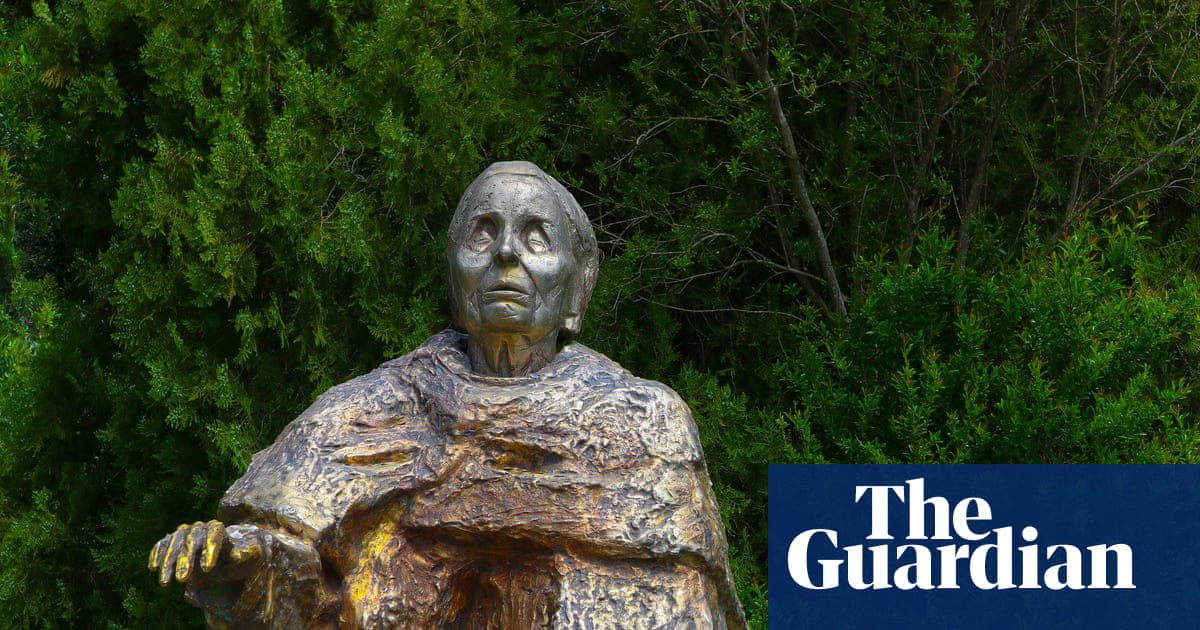
Their daughter’s best friend, Franzi, helped with their online marketing and now oversees the business’s social media presence from the store. And a lifesize bronze sculpture depicts Johanna seated with one of her beloved cats, who also died in the flood, under one hand, a chocolate praline in the other.
The Orths say the shop has become something of a pilgrimage site for parents who have lost children. When they meet other grieving couples, the initial communication is often wordless. Some reach for a hug as soon as they see them.
“That is fine,” Ralph said, tears welling in his eyes.
The couple recall an elderly woman last year who, having read about the shop, told them she took the train from Berlin just to deposit a single white rose on the statue in Johanna’s memory. “I still get goose pimples when I think of it – it was indescribable,” Inka said.
Ralph has become an “informal” representative of the families who lost loved ones in the Ahr valley flood, and has campaigned for the political officials who failed to order an emergency evacuation to be brought to justice. Their legal action is still pending.
The Orths commute the 300 miles (500km) back to Bad Neuenahr most weeks to see family and visit Johanna’s grave. But they said Hamburg, which experienced its own flood catastrophe in 1962, had done a better job of learning from the disaster than their home region.
With climate change increasing the frequency and severity of flooding, Ralph said he was angry more German urban areas were not adopting best practice when it came to measures such as early-warning systems. “It’s like everyone wants to reinvent the wheel instead of looking at where things work well.”
The couple never speak of “moving on”. The constant reminders of their daughter ground them and help mitigate her wrenching absence.
The shop, meanwhile, is firmly centred around community and life’s great pleasures.
“This is not the patisserie of mourning,” Inka said. “For us it’s, of course, the highest compliment when people leave here happy.”