.png) 2 months ago
74
2 months ago
74
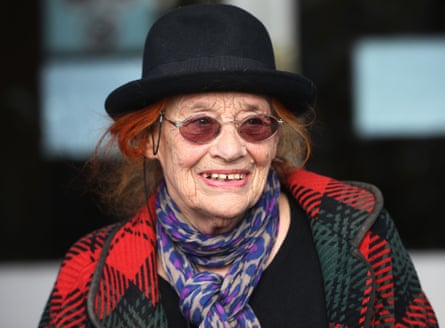
Political activism, protest, dissent and conflict with the theatrical establishment were not acquired through the life experience of the writer and dramatist Margaretta D’Arcy, who has died aged 91.
They were genetically formed, deep in her bones; experience merely enhanced them, and they sprouted in her marriage to the playwright John Arden in 1957. Arden was separately acclaimed for his early plays Serjeant Musgrave’s Dance, The Workhouse Donkey and Armstrong’s Last Goodnight.
But writing together from 1960 – they had first met in London in 1955 – Arden and D’Arcy shared authorial credit for The Happy Haven (1960), a remarkable, sardonic farce played by masked actors in an old people’s home; The Ballygombeen Bequest (1972), a tight and funny satirical attack on British military action in Northern Ireland rewritten, after being halted by a libel suit, as The Little Grey Home in the West (1982); and The Island of the Mighty (also 1972), a sprawling Arthurian mythical/historical trilogy relating to developing-world struggles of that time, notably in India.
This last epic was a defining moment for them, and playwrights generally, as a compression of the work to which they had agreed exploded in a dispute several weeks into rehearsal. They disowned the production, and the presentation by the Royal Shakespeare Company, and picketed their own work, in effect going on strike and withdrawing from the British establishment theatre.
They had also gone on strike, less spectacularly, in a chaotic epic, four performances only, of The Hero Rises Up (1969), about the life and loves of Horatio Nelson, at the Roundhouse in north London. The director Mike Bradwell, then a student, but operating the lights, recounted (in his book The Reluctant Escapologist) the absurdity of Arden and D’Arcy picketing their own show on the first night as the performance fell apart and insisting on free performances for the remainder of the short run, with Arden passing round a bucket to the meagre audience for contributions to pay the actors.
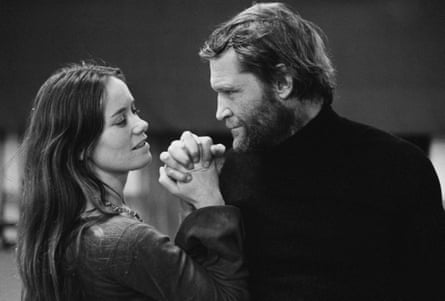
Some critics thought that D’Arcy’s intransigent hot-headedness had done Arden no favours, arguing that his writing deteriorated. This is not true. He continued to write ferociously and passionately, and not just plays but also – without D’Arcy – novels (including the 1982 Booker short-listed Silence Among the Weapons) and brilliant essays.
Their action against the RSC led to the formation, in 1976, of the Theatre Writers’ Union, though in an essentially collaborative art form, most playwrights do conform to both major and minor changes to their work in rehearsals, where the play is properly discovered. Subsequent performances, as the director Michael Blakemore once said, are about discovering the audience.
Arden and D’Arcy were at one in their belief that politics in all things, especially theatre, came before theatre as theatre. This discounts the view that all theatre, to a greater or lesser extent, is political.
D’Arcy campaigned at Greenham Common against cruise missiles in Europe and was imprisoned in Armagh jail twice: for three days in 1978, after protesting at the banning of an H-Blocks prison camp march; and for three months in 1979, for protesting, on International Women’s Day, against the inhumane, degrading conditions for female Republicans in that antediluvian 18th-century lock-up. She wrote a scorching account of the experience in Tell Them Everything (1981).
Indomitable to the end, she spent her last days on a walker, brandishing pro-Palestinian placards and campaigning for Catherine Connolly as Irish president. On D’Arcy’s death, Connolly paid tribute to “a woman of extraordinary conviction and radical honesty … a singular voice in Irish culture and civil life”.
She was born in Whitechapel, London, the third of four daughters of Joseph D’Arcy, a Dublin-born civil servant who was a member of the IRA during the war of independence, and his wife, Miriam (nee Billig), from Odesa in Ukraine, whose Jewish family had fled from Russian pogroms to the East End; her sister was Hannah Billig, a distinguished and popular physician known locally as the angel of Cable Street, where she had a clinic.
The family (without Hannah) relocated to Dublin after the second world war where Margaretta was educated at school in the suburb of Cabra and at Trinity College, studying drama. In 1953, she worked briefly at the newly opened, internationally minded Pike theatre before moving back to London. She worked as an actor and, with Arden in 1960, was an original signatory of Bertrand Russell’s anti-war Committee of 100, which also included the film director Lindsay Anderson and Pat Arrowsmith, co-founder of CND.
There was a more decisive move back to Ireland with Arden in 1968, settling in Galway (though often crossing over to London for plays and demos), joining the civil rights movement there as well as Sinn Féin (she was expelled over “political differences” in 1972) and the Society of Irish Playwrights (later the Writers Guild of Ireland).
In 1975, the couple wrote The Non-Stop Connolly Show, a rousing, rambling six-part chronicle of the life of James Connolly, the Marxist union leader, who led the Irish Citizens’ Army against the British in the Easter Rising of 1916. The premiere in Dublin played over Easter weekend for 26 hours continuously.
Other notable collaborations included a touring production of Vandaleur’s Folly (1978), charting the angry disillusion of both communal farmers with the incipient Orange Order of the early 19th century, and feudal injustices including the slave trade; and a nine-play epic for BBC radio, Whose Is the Kingdom? (1988), critically setting the earliest days of Christendom against the concept of a deistic monarchy.
Arden died in 2012. Margaretta was predeceased by two of their five sons, Gwalchmei (a Welsh name that roughly translates as Gawain), who died at eight weeks, an experience she recorded most movingly in her 2005 memoir, Loose Theatre, and Jacob in 2013. She is survived by the other three sons, Finn, Adam and Neuss, and six grandchildren.