.png) 2 months ago
58
2 months ago
58
A peer suspended by the House of Lords for breaking lobbying rules is now facing claims that he received at least $1m (£760,000) from an allegedly corrupt deal.
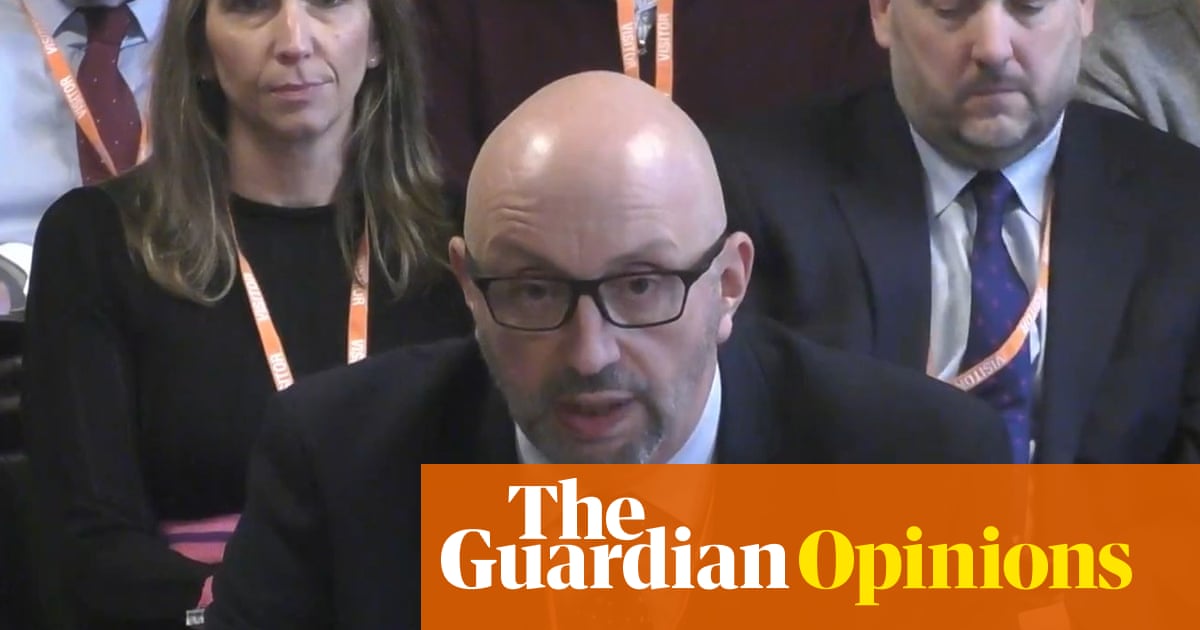
Lord Evans of Watford, a longtime Labour peer, was found last week by the House of Lords watchdog to have broken its rules four times after undercover reporting by the Guardian, and will be suspended for five months.
The peer was caught in a cash-for-access venture offering to introduce undercover reporters to fellow parliamentarians.
Now it can be revealed that he is separately facing legal action over payments that he and others received as directors of a UK investment firm that managed assets based in Kazakhstan.
Court documents show that Evans and the other directors have been accused by a former executive of “personally enriching themselves” by pocketing millions in alleged illicit payments. Evans and the other directors deny the allegations, which they said were part of “meritless” lawsuits.
They are accused of receiving the payments as part of a deal in which they sold the assets of the investment firm for a fraction of their value.
Court papers allege David Evans received a $1m bonus specifically for approving the deal as a director, as well as an annual salary of $250,000, and other bonuses worth hundreds of thousands of dollars.
Evans and the directors have rejected the accusations as worthless, saying that the former executive is disgruntled and acting “hypocritically”, as he had originally supported the deal that he was now denouncing as corrupt.
Their claims and counter-claims are being contested in two court cases in Britain and the US, which have yet to reach a resolution.
While the legal dispute progresses, the 82-year-old peer will be suspended from the House of Lords after the parliamentary watchdog’s findings. He has also lost the Labour whip.
The watchdog imposed the punishment after Guardian undercover reporters exposed how the peer and his son, Richard, were running events in parliament that provided paying attenders opportunities to meet politicians.
The peer was recorded offering to introduce the undercover reporters – who were posing as property developers hoping to lobby the government – to fellow parliamentarians.
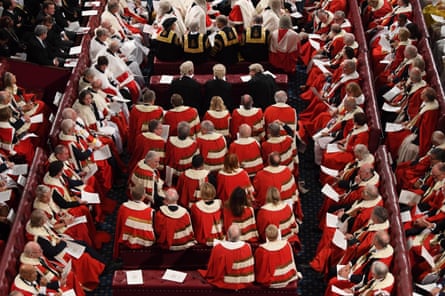
The watchdog concluded that the peer had used his position in the second chamber to get fellow peers to speak at the commercial events in which he had a financial stake.
Evans told the undercover reporters how it was “great being a Labour peer at the moment because we’ve got our mates who now have senior jobs”.
One of the longest-serving peers, Evans was ennobled in 1998 by Tony Blair. He had backed the Labour party with donations of at least £30,000. He has rarely contributed to debates in the chamber, speaking only twice in the past 15 years.
Since 2022, he has been a director of the UK firm Jusan Technologies Ltd. According to the court papers, Jusan was responsible for managing a range of commercial assets, and its profits were used to fund a US charity that in turn supported educational projects in Kazakhstan.
The legal papers say he and other directors were appointed “for the purpose of better relations and effective negotiations with the government of Kazakhstan”.
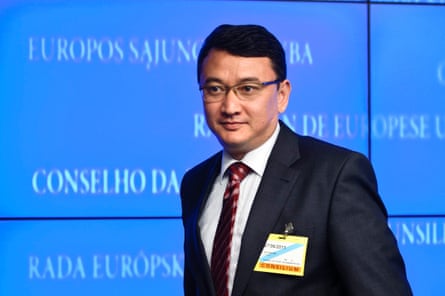
The legal dispute centres on a deal in 2023 in which these Kazakhstan-based assets were sold to a Kazakh oligarch.
Yerbol Orynbayev, a former Jusan executive, has filed a US lawsuit against Evans and the other two directors, accusing them of “systematically looting” the US charity by stripping it of its assets.
after newsletter promotion
Orynbayev claims that the assets, which he says were valued at $1.6bn, were allowed to be bought by the oligarch for a “minuscule fraction” of their value – $75m – in a “sham” deal.
Orynbayev also alleged that Evans and the other two directors had diverted “millions in illicit side payments to themselves” in a “corrupt” deal. He claimed that they were paid huge salaries and bonuses that were “excessive” and unjustifiable.
Orynbayev, who is a former deputy prime minister of Kazakhstan, says he set up the US charity to insulate the educational work from “political interference and corruption”.
He now lives in the US, where he is a businessman. He says in his legal claim that he lost out financially when the Jusan assets were sold, as the value of his shareholding plummeted.
Orynbayev’s claim is rejected wholesale by Evans and the other Jusan directors. A spokesperson for the group said: “Mr Orynbayev is a disgruntled JTL shareholder who is upset that he was unable to sell his shares in JTL at a profit.
“It is the height of hypocrisy and irony for a former deputy prime minister of Kazakhstan to now attack lawful transactions, settlements and compensation as ‘corrupt’ arrangements when he fully supported them at the time. We are confident that we will prevail in his various meritless lawsuits.”
Orynbayev said these accusations were “misleading and false”.
The Jusan directors have argued in court that in 2022, the Kazakh government launched a “coordinated campaign”, including legal action, to seize the assets held by Jusan. This left the assets “frozen and at risk at expropriation, which meant that they were effectively worthless” – a reality, they say, that was ignored by Orynbayev.
Orynbayev’s claims have been questioned by a UK judge who has presided over the UK lawsuit.
In a preliminary ruling in 2024, the UK judge noted that Orynbayev appeared initially to have given “slanted and partial” evidence to back up his allegations, making his claims appear “much less credible” than they did originally.
Casting doubt on Orynbayev’s claim that the assets were sold fraudulently, the judge suggested evidence indicated that the value at best would have been $150m.
However, the judge accepted that the circumstances of the sale of assets had “not been fully explored”. He also said there remained “a real question about … the director remuneration issues.”