.png) 2 months ago
61
2 months ago
61
Whether it’s the gift wrap (108m rolls discarded annually), the food (the average family wastes about £60 of it over the festive period) or the dreaded plastic packaging (more than 114,000 tonnes of it is discarded during Christmas in the UK), there is a lot of unnecessary festive stuff. According to Waste Direct, the UK produces 30% more waste at Christmas than at any other time of year.
A few years ago, a family member started a conversation about finding Christmas overwhelming because they were receiving gifts they didn’t really want or need. That sparked a chain reaction whereby we now have a more considered Christmas, choosing presents more wisely (or not at all) and cutting down on the excess. I’ve taken this experience – which has been truly rewarding – plus the advice of experts, to explore easy and joyful ways to be less wasteful this Christmas.
How to reduce waste this Christmas
Open conversations

Talk to friends and family before you start buying gifts. Try setting a budget, or limiting the number of gifts you buy per person, and take the time to ask people (or their nearest and dearest) what they want. If someone says they would prefer not to receive anything made from plastic, or bought from Amazon, or doesn’t want anything at all, respect their wishes. There’s always good old Secret Santa to consider as an option: get family members to write a short list of things they want, pick one name each anonymously, and everyone buys just one present.
Invest in reusable crackers
You could try making your own with wrapping paper and cardboard tubes, but reusable fabric crackers are easier and make a statement on the table. They seem quite an expensive investment, but you’ll never need to buy them again. Fill with whatever you like; I like to buy festive locally handmade chocolates, which I wrap in tinfoil, and I make hats from last year’s wrapping paper.
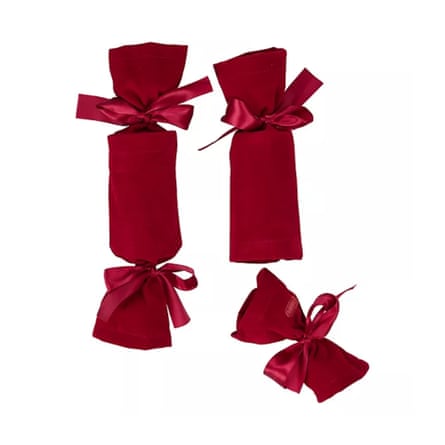
Red velvet reusable crackers
Try zero-waste wrapping
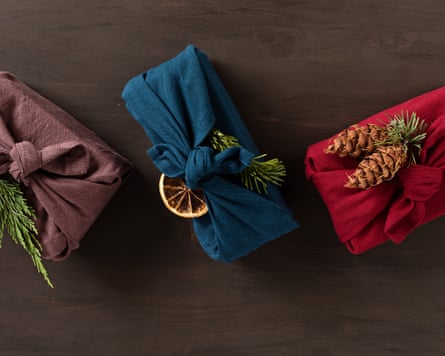
Christine Leech, author of Zero Waste: Gift Wrap, recommends looking to Japan for inspiration. “Tsutsumu refers to the Japanese tradition of packaging and wrapping gifts, and is done as a gesture of respect for the recipient,” she says of this ancient technique of knotting various materials, including paper and fabric, around gifts. “It is also a very mindful and calming way of wrapping gifts.”
Look for vintage scarves on reseller sites or in charity shops, or for a more cohesive look under your tree, buy a couple of metres of lightweight cotton from your local fabric shop and use pinking shears to cut it into any size square you require.” The bonus is that materials can be reused from year to year, especially if you get other friends and family on board who can pass them back and forth.
You could also wrap gifts in any leftover brown packing paper or newspaper. Replace plastic sticky tape with washi tape or brown paper tape, which is usually made from natural materials.
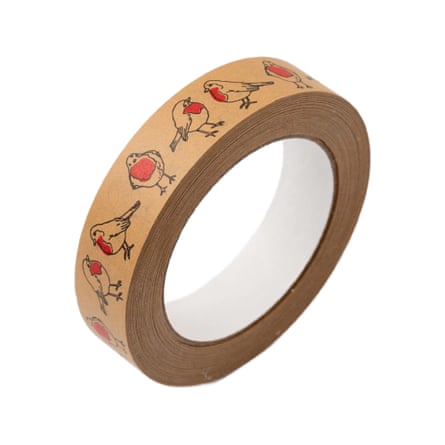
Christmas robin kraft paper tape
Relish your leftovers …
Recipe developer, cook and food writer Elly Curshen’s Rollover Leftovers series of Instagram videos tackles kitchen waste, and she swears by the right storage. “I love glass containers for the fridge so I can see what’s inside – out of sight is out of mind, and that’s when leftovers get wasted. My favourite ones are by Pyrex, and I reuse storage boxes and bags that food arrives in, as much as possible.”
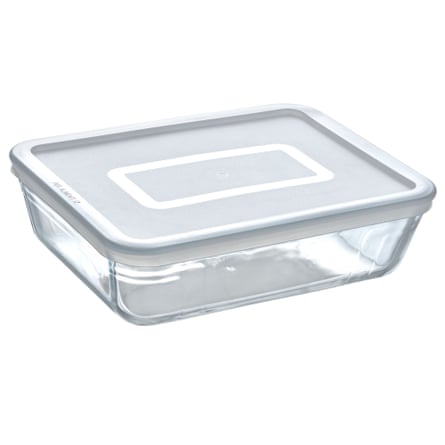
Pyrex glass dish with plastic lid
… and make the most of sprouts
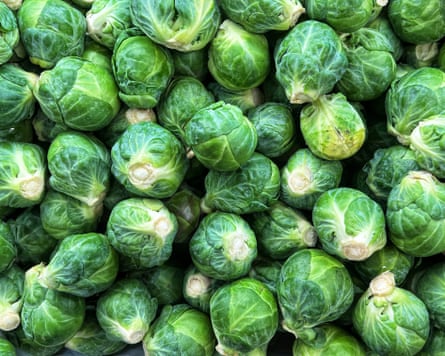
“Don’t cook more than you’ll eat,” says Curshen, who prefers to use sprouts in their unboiled state when she has a glut. “Raw, and finely shredded, brussels sprouts are worlds away from the boiled, waterlogged vegetables you may think of and shudder. They have a distinctly “green” flavour, and pair so well with lemon and olive oil. Trim the bases and pop a load down the chute of your food processor (fine-slicing blade attached) and you’ll have a big pile of shredded greens in seconds. They’re excellent value for money, and shredded sprouts can be added to slaws or kimchi recipes, too.”
She also warns about buying too much cream. “It’s one of the most common ingredients I get asked for ways to use up after Christmas. I’d recommend buying smaller tubs and flavouring [it] yourself, rather than buying flavoured cream (however delicious they sound!). Leftover cream can be used in lots of ways, like making homemade butter, but a flavoured one makes that hard.”
Choose linen for tableware and napkins
Festive paper napkins are convenient but single-use. Linen is among the most sustainable fabrics on the planet, since the flax it is made from grows easily without the need for irrigation or pesticides. Opt for vaguely festive shades, such as red or green in stripes or gingham, and you’ll be able to use them all year round.
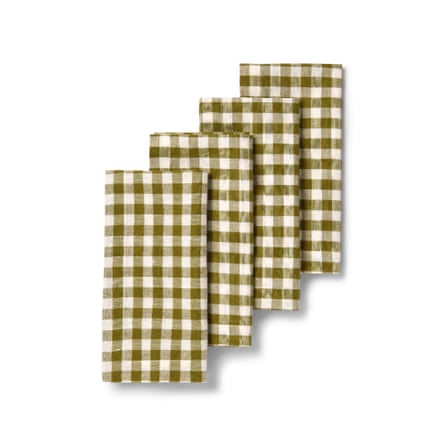
Set of four linen blend napkins
Buy things you genuinely love yourself
If you love something and find it useful, the chances are someone else will. Many years ago, a friend gave us a cookbook and wrote the page number of her favourite recipe in the front with the note “I would eat this every day if I could”. It’s been one of our most-made dishes ever since.
after newsletter promotion
Set a charity shop challenge

“I do my children’s stockings mainly from charity shops, it’s so much fun,” says fashion editor Alex Stedman. “I love finding perfect toys and books, and this way, I allow myself to buy plastic tat (which my kids adore) too. In previous years, I have also bought vintage records for my husband. Finding treasure secondhand is so satisfying.”
Make a festive tabletop game
It may be tempting to buy festive toys to keep the kids busy while you’re roasting the turkey, but chances are they’ll only be played with for a few days. Instead, make an ice rink. “Freeze a baking tray or dish filled with a shallow amount of water,” suggests Sydney Piercey, author of Sustainable Play. “Take two small strips of cardboard and fold each one into thirds to make a goal. Set them up at either end of your frozen water tray, and using two teaspoons, send a coin to either end of your tray. Now, you have a fun DIY ice hockey game to entertain your children.”
Shop small
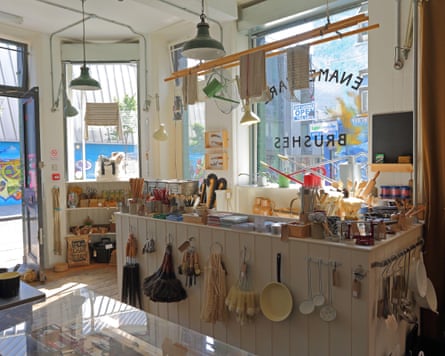
“When you shop small, you are going directly to the creative source, something they’ve poured heart and soul into,” say Daisy Middlecote-Tinker and Olivia Odlum-Tinker, founders of Salad Days Market, a pop-up of independent small businesses that will be at Battersea power station in London on 13 and 14 December. “It says to the recipient: ‘I went out of my way to find this special thing, just for you.’” Items from small local businesses are often handmade or vintage, they add, and tend not to come wrapped in layers of plastic or cardboard boxes, which means less waste. If you can’t make it to a market, shop independent and ethical brands online at Labour and Wait, Percy Langley and Gather & See.
Choose consumables
My brother and sister-in-law prefer to give and receive consumable presents, in the name of creating less waste. This is great news if you’re a dab hand in the kitchen, as you can make your own chutneys and pickles as gifts. Or you can give a growing kit, like these grow-your-own mushrooms.
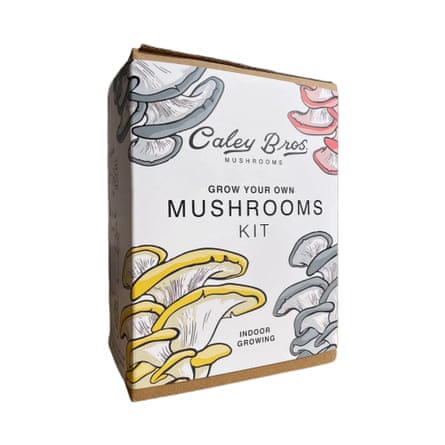
Grow-your-own-mushrooms kit
Source decorations secondhand
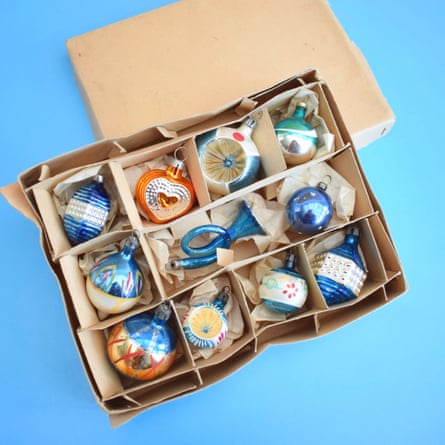
If you weren’t lucky enough to inherit your nan’s retro glass baubles (me!), Pineapple Retro has a fantastic selection. “I love a preloved Christmas decoration, and they’re so easy to get hold of,” agrees sustainable lifestyle content creator Izzy Manuel. “My local charity shop always has a Christmas section this time of year.” She cautions that timing is key when decluttering your own decorations. “I store decorations that I feel aren’t my style any more separately until November and then sell them in the run-up to Christmas when people are looking.”
… or make your own …
Brown paper, cardboard and even the pages from old books are great for making decorations. On Instagram, Geneva Vanderzeil has a wealth of cardboard ideas, while Piercey recommends making paper stars, even if you’re a beginner to crafting. “They’re straightforward to make, especially once you’ve made a few, but they look so impressive. Even one on its own, hung up on a cupboard or door, can give a Christmassy touch.”
… and think ahead to next year
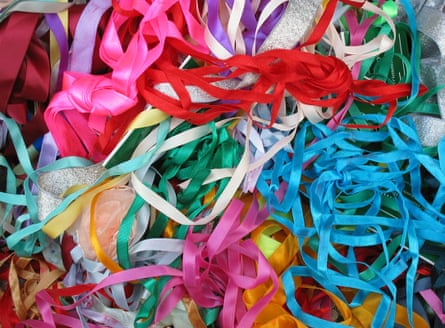
Don’t forget to save what you are given this year for next. Ribbon can be made into rosettes or simply kept for future wrapping (my mum and I have been passing the same ribbon to and fro for about a decade); paper and festive bags can be stored and reused; and cards can be cut into gift tags. “Turn old gift wrap into paper chains or use it to make festive collages on next year’s Christmas cards,” says Leech. “I collect up any ribbon trim and make it into small rosettes for present toppers and badges for gifts over the coming year.”
For more, read 33 easy plastic-free kitchen swaps
How do you have a less wasteful Christmas? Whether it’s food or wrapping paper, setting a budget or present buying, we’d love to hear about all the ways you consume less at this time of year. Let us know by emailing [email protected].
Hannah Rochell is a fashion features journalist who specialises in writing about – and experiencing – slow, comfortable style and living on her Substack Slowette. This involves everything from exclusively wearing flat shoes and investing heavily in elastic-waist linen trousers, to advocating for dehumidifiers instead of tumble dryers and learning to sew

Christmas shopping can be tough – so we spent months finding the perfect presents for everyone on your list. We selected the best products from our testing; enlisted babies, kids and teenagers to find out what they really wanted; and sniffed, tasted and tested the good, the bad and the ugly to bring you 305 genuinely brilliant gifts.