.png) 2 months ago
61
2 months ago
61
Not all memoirists are keen to share their life stories. For Margaret Atwood, an author who has sold more than 40m books, the idea of writing about herself seemed “Dead boring. Who wants to read about someone sitting at a desk messing up blank sheets of paper?” Happily, she did it anyway. Book of Lives: A Memoir of Sorts (Chatto & Windus) is a 624-page doorstopper chronicling Atwood’s life and work, and a tremendous showcase for her wisdom and wit. Helen Garner’s similarly chunky, Baillie Gifford prize-winning How to End a Story (Weidenfeld & Nicolson) is a diary collection spanning 20 years and provides piquant and puckish snapshots of the author’s life, work and her unravelling marriages. Mixing everyday observation and gossipy asides with profound self-examination, it is spare in style and utterly moreish.
In Arundhati Roy’s Mother Mary Comes to Me (Hamish Hamilton) and Jung Chang’s Fly, Wild Swans (William Collins), formidable mothers get top billing. In the former, The God of Small Things author reveals how her mother, whose own father was a violent drunk, stood up to the patriarchy and campaigned for women’s rights, but was cruel to her daughter. Describing her as “my shelter and my storm”, Roy reflects on Mary’s contradictions with candour and compassion. Fly, Wild Swans is the sequel to Chang’s bestselling Wild Swans, picking up where its predecessor left off and reflecting how that book was only made possible by the author’s mother, who shared family stories and kept her London-dwelling daughter apprised of events in China.
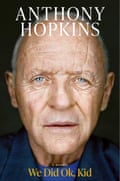
Matriarch by Tina Knowles (Dialogue) is an unusual take on motherhood, as it reveals the reality of rearing two musical superstars: Beyoncé and Solange. We learn how Knowles, whose great-grandmother Célestine was a slave in Louisiana, became the ultimate stage mom, guiding her girls to realise their creative dreams while fostering pride in their blackness and womanhood. Elsewhere in the crowded pantheon of celebrity memoirs, Anthony Hopkins’ We Did OK, Kid (Simon & Schuster) stands out as a thoughtful and unvarnished account of a storied life and career. The book digs deep into the actor’s problems with anxiety and addiction – he sought help for alcoholism after driving from Arizona to Los Angeles blind drunk – and his discomfort with fame. Vagabond (Century) by Tim Curry is a brisk and bracingly sweary memoir by the actor best known for playing Rocky Horror’s Frank-N-Furter. Though he skimps on the details of his personal life – “respectfully, none of your fucking business” – he is enjoyably scathing about the talents (or lack thereof) of some of his acting peers.
Kathy Burke’s A Mind of My Own (Gallery) begins in an Islington council flat where, as a child, Burke shared a room with her alcoholic and fitfully violent father. “We were living with a lunatic,” she notes. But you won’t find any self-pity in this terrifically entertaining life story, which goes on to recall her time at the Anna Scher theatre school and a career-defining role in Gary Oldman’s Nil By Mouth. Her stories of posh actors and directors looking down their noses at her, a working-class woman, are a hoot.
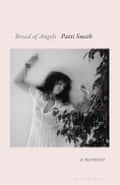
Like Burke, the musician and poet Patti Smith had a tough start in life, living in poverty and frequently confined to her bed from illnesses including tuberculosis, scarlet fever and pneumonia. Soulful and intimate, Bread of Angels (Bloomsbury) is Smith’s fourth volume of autobiography, and details her childhood, her decade away from music raising a family and her return to work following a series of devastating personal losses.
In Lionel Richie’s Truly (William Collins), the All Night Long singer traces his path from Tuskegee, Alabama, to member of the Commodores, before making it as a chart-topping solo artist. His story brims with gratitude at his good fortune and is punctuated by cameos from Gregory Peck, Sammy Davis Jr and Nelson Mandela, among others. There are stars aplenty in The Uncool (4th Estate), in which Cameron Crowe, director of Almost Famous, looks back on his days as a teenage music journalist for Creem and Rolling Stone, during which he enjoyed months-long access to David Bowie, Iggy Pop and the Stones. Casting himself as the nerdy outsider, his account is full of charm and lyricism.
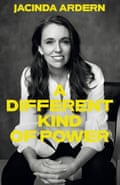
Frankly (Macmillan) by the ex-first minister of Scotland, Nicola Sturgeon, and A Different Kind of Power (Macmillan) by former New Zealand PM Jacinda Ardern, both reveal much about the misogyny endured by female leaders. Along with the sexist jibes from opponents and the press, one of the biggest challenges for Sturgeon was quelling the voice in her head “telling me I wasn’t good enough”. Meanwhile, Ardern, who gave birth less than a year into her premiership, had to deal with the pressure of keeping her early pregnancy hidden, and later, as a new mother, worrying about being perceived as not giving her all to the job.
The first nonfiction work by the Essex Serpent author Sarah Perry, Death of an Ordinary Man (Jonathan Cape), is a moving chronicle of the final days of the author’s father-in-law, David, who died aged 77 of oesophageal cancer. Loved by his family, David lived an unremarkable existence, yet Perry renders the life and death of this reserved soul in brilliant and penetrating detail.
Another unremarkable life comes under the microscope in I Deliver Parcels in Beijing (Allen Lane), a powerful memoir by Chinese author Hu Anyan now translated into English. Anyan, who had 19 jobs in six cities after leaving high school, details the lonely and dehumanising grind of China’s gig economy. The book is a grim indictment of a terrible system, though Anyan finds humour and dignity in his bleakest moments.
after newsletter promotion
Yiyun Li’s revelatory and unsparing Things in Nature Merely Grow (4th Estate) tells of the author’s experience of losing two sons to suicide and her path to a life of “radical acceptance”. Loss but also laughter pervades A Truce That Is Not Peace (4th Estate), a bracingly blunt and deliberately fragmented memoir from Canadian writer Miriam Toews in which she recalls the deaths of her father and sister from suicide, along with her repressive Mennonite upbringing. Lifeblood (Daunt) is an impossibly poignant memoir by Mina Holland about her experience of caring for a daughter with a rare and life-threatening blood disorder.
It has been a vintage year for biographies of cultural giants. Readers undaunted by the prospect of 1,000+ pages are rewarded with depth and insight in Ron Chernow’s Mark Twain (Allen Lane), an account of the life of the author of The Adventures of Huckleberry Finn. Shorter, but no less heavyweight, is Andrew Graham-Dixon’s Vermeer: A Life Lost and Found (Allen Lane), which explores the life and work of the Dutch painter. Among the revelations is the identity of the Girl with a Pearl Earring, who is not, the author believes, either Vermeer’s daughter or his maid.
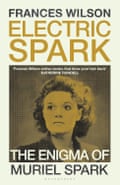
Frances Wilson’s Electric Spark (Bloomsbury) is a terrific study of Scottish writer Muriel Spark, focusing on the formative decades before the publication of her first novel. Meticulously researched and illuminating, Gertrude Stein: An Afterlife (Faber), by Francesca Wade, analyses its subject’s life alongside her posthumous reputation. Katherine Mansfield: A Hidden Life (Reaktion) by Gerri Kimber is a sensitive and scholarly account of the fiercely independent life of the modernist writer whose talent was the envy of Virginia Woolf. Hanna Diamond’s Josephine Baker’s Secret War (Yale) tells the gripping tale of the music hall star and actor who worked with the French Resistance and the British and American intelligence services during the second world war. Less well known but still fascinating is Rosemary Woodruff, fourth wife of counter-culture luminary Timothy Leary, whose story is skilfully told in Susannah Cahalan’s The Acid Queen (Canongate). Woodruff’s unusual life – which took in communes, drugs, criminal cartels and breaking her husband out of prison – proves more than worthy of posthumous attention.
Finally, Ian Penman’s Eric Satie Three Piece Suite (Fitzcarraldo) adopts a fresh approach to biography, examining the achievements of the French composer in the form of an A-Z anthology, with entries including Les (as in Dawson, who Penman posits may have been a fan) and Bowler Hat (Satie’s preferred headwear). The book is as delightfully oddball as its subject.