.png) 2 months ago
53
2 months ago
53
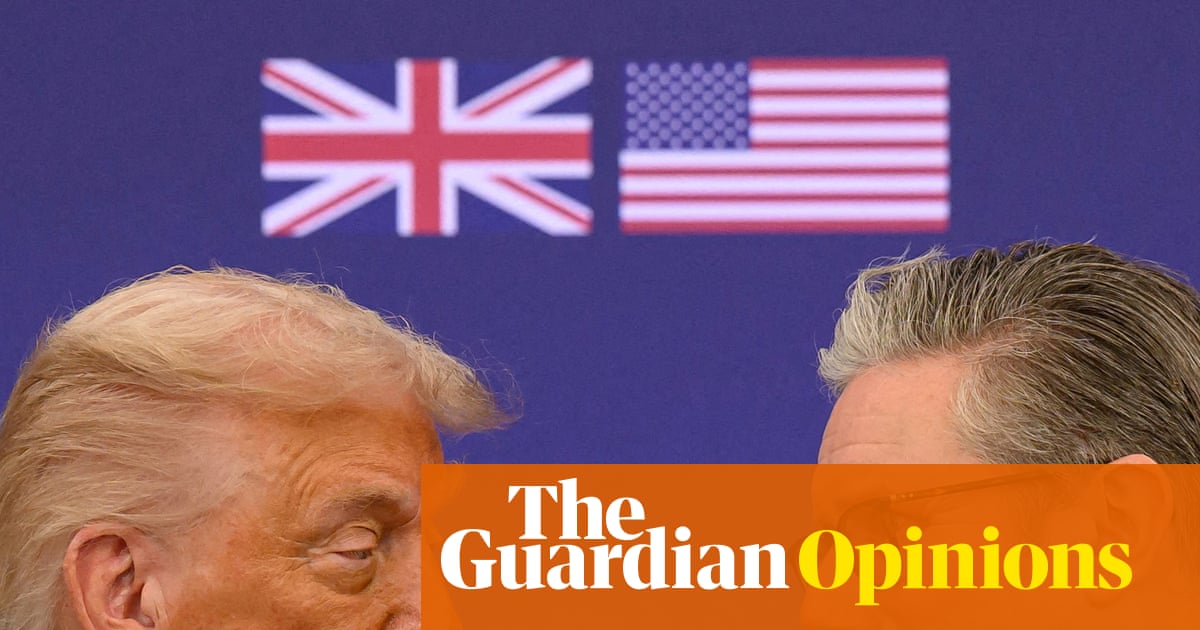
The bullying of Ukraine by the Trump White House has exposed Sir Keir Starmer as a prime minister adrift in shifting geopolitics. Unable to describe Britain’s position, he managed only a hope of “lasting” peace. This reveals a British state that has been hollowed out, as well as the diminishing returns of a political order built for another age. For decades, UK leaders assumed that the US would underwrite Europe’s security; that, as Washington’s closest ally, Britain would punch above its weight; and that British institutions would stabilise order, if not justice, in turbulent times. That world has gone.
Monday’s Downing Street summit with the Ukrainian president, Volodymyr Zelenskyy, the French president, Emmanuel Macron, and the German chancellor, Friedrich Merz, threw the dilemma that Sir Keir faces into sharp relief. Mr Macron could speak of the cards in Europe’s hand; Germany’s leader could voice scepticism about American proposals. Even Mr Zelenskyy, fighting for national survival, could pithily articulate why he needed both Europe and the US. Each spoke from within a political system that, however imperfect, has begun adapting to a post-American world. Britain has not – and, under its present leadership, shows little inclination to even envision one.
Britain’s shrinking strategic autonomy and civic purpose is the result of a financial system that underpins its economic imbalance. The country is led by a prime minister who speaks of a “moral mission” to transform Britain while embracing a hyper-cautious spending programme. His appeals to civic unionism assume a coherent political community with shared interests, but the old solidarities of class and region have frayed; Scotland, Wales and Northern Ireland pull in divergent directions; and society has withered under decades of managerialism and marketisation.
Financialisation has undermined the basis of a sovereign state: overvaluing sterling, gutting manufacturing and driving private debt as capital chases speculation over production. It is no surprise that Britain lacks the industrial depth to arm Ukraine, the budgetary flexibility to shape European security and the diplomatic leverage to challenge a US administration bent on forcing a premature settlement. The prime minister’s deference reflects not only conviction but constraint.
The British state tradition – dependent on elite stewardship rather than civic engagement – has reached the limits of its utility. It once enabled decisive action; today it produces managerial caution. Britain’s leaders have authority, but not the imagination to reinvent it. This is most evident in the dominance of the Treasury, which continues to define the limits of what is possible. After years of being unfairly targeted, the civil service has retreated to the sidelines. Political parties have become electoral machines rather than representing a wider collective purpose. From that perspective, Sir Keir’s stance is a feature, not a bug, of the system.
Nostalgic appeals to “a special relationship” that no longer exists will not renew Britain. That demands a profound reimagining of the nation’s constitutional, economic and geopolitical identity. The prime minister’s response to US manoeuvres over Ukraine reveals a leader trapped within a fading order. The tragedy is not just that he cannot meet the moment, but that neither can the British state. Until the country’s politics can move on from past glories, it will continue to produce leaders who mirror the state they inherit. Even if they are dutiful and conscientious, they will still be lost.