.png) 2 months ago
63
2 months ago
63
Laziness is akin to godliness. I know this for a fact because, every morning, my kitchen hosts a dishevelled re-enactment of Michelangelo’s famed fresco, the Creazione di Adamo (Creation of Adam). An outstretched arm extends a single finger, and lo – a bean-to-cup machine stirs, a grinder whirs, the smell of freshly ground coffee wafts, coffee drips and milk froths. Hopefully, my cup does not runneth over, for all the big mugs are in the dishwasher.
At its simplest, this is the appeal of a fully automatic bean-to-cup coffee machine. Turn it on, place a cup on the drip tray and lazily prod a button. The machine then freshly grinds the beans, brews the coffee and – if it has an automatic milk frother – optionally adds a layer of hot frothy milk to your beverage. Your role in the process is simple: decide whether you want an espresso, lungo, americano, cappuccino, macchiato, latte or cortado. Decisions, decisions.
In this roundup, I’ve collected the best bean-to-cup machines that have passed through my kitchen in recent months (or in some cases, years), and tested them alongside a handful of less familiar models that have also earned their automatic barista accreditations. Think of this as a work in progress: I’ll be adding new models as and when they arrive in my kitchen – and prove themselves capable of making delicious coffee.
Note, there are different kinds of bean-to-cup coffee machines, which require different levels of input to achieve different results. If you need a refresher, I go into the details at the end of the article.
At a glance
-
Best bean-to-cup coffee machine overall and best on a budget:
De’Longhi Magnifica Start
-
Best bean-to-cup coffee machine under £1,000:
De’Longhi Rivelia
-
Best bean-to-cup machine for simplicity:
Jura C8
-
Best bean-to-cup machine for coffee connoisseurs:
Sage Oracle Jet
-
Best high-end fully automatic bean-to-cup machine:
Jura J10
-
Best value assisted machine:
Ninja Cafe Luxe ES601
Why you should trust me
I’ve been reviewing tech and gadgets of all shapes and sizes for more than two decades, and I branched out into testing coffee machines about eight years ago. Whether it’s cafetières or capsule machines, manual espresso or fully automatic bean-to-cups, I’ve put hundreds of hours and – most probably – hundreds of kilograms of coffee into the pursuit of a pleasing caffeine hit. And yes, I’ve drunk a lot of the stuff too. At the time of writing, far, far too much. I’ll be going for a long, long walk after I’ve finished writing this.
How I tested
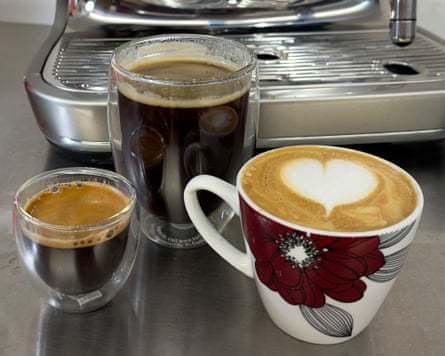
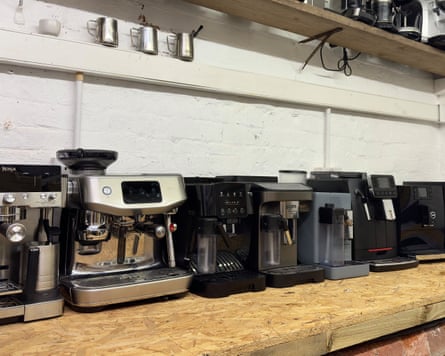
There’s a lot to consider with an automatic bean-to-cup coffee machine, so everything goes under the microscope. Some aspects are subjective (the ease of use, coffee quality and the overall design) while others can be measured – coffee temperature, noise, and how long the machines take to heat up.
I tested 12 models, taste-testing side by side against their nearest competitors to see how they performed for espresso, black coffee and milk-based drinks. Noise levels for grinding, brewing and milk frothing were measured with the Decibel X app on my iPhone to test comparative noise levels in A-weighted decibels (dbA), and my trusty Thermapen handles the temperature testing side of things.
The best bean-to-cup coffee machines in 2026
Best bean-to-cup coffee machine overall and best on a budget:
De’Longhi Magnifica Start
De’Longhi
Magnifica Start
from £279.99
What we love
Good coffee; simple controls; affordable
What we don’t love
Tiny milk carafe; noisy operation
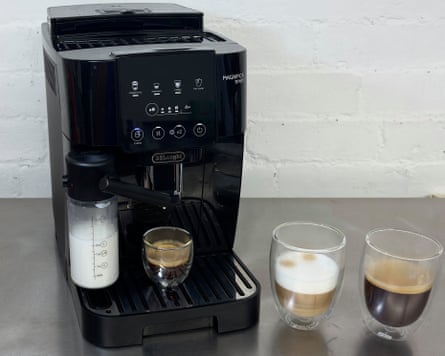
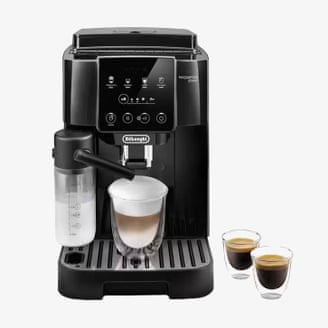
If the best things in life are free, then the second-best things are cheap. And if you’re really lucky, simple. That’s the Magnifica Start to a T. This fully automatic bean-to-cup machine serves up good espresso, black coffee and cappuccino at the touch of a button, and it’s easy to use. Keep an eye on the sales, and you can pick it up for £300 or so.
Why we love it
The Start looks good, with a mixture of matt and gloss black plastics and a little chrome here and there. It feels solid where it needs to: the drip tray and grounds bin slot out together, and the 1.8-litre water tank feels nice and sturdy.
De’Longhi includes a water filter in the box, which lasts about three months, depending on your usage and water hardness. A tester in the box allows you to set your water hardness so that the machine will prompt you to descale at sensible intervals.
The quality of the coffee is good. Feed it with decent coffee, and the Start will reward you with a tasty, balanced cup. I had to reduce the grind size by a couple of steps to get a more robust espresso out of it, but it’s easy to tweak. Tapping the coffee bean control gives you three strength levels, too.
Milk texture is good – better than the pricier Philips. The foam is tight and creamy and lasts long enough to make for a pleasant drink. The lack of a dedicated hot milk button is an annoyance – but there is a trick. Use the pre-ground coffee option, but don’t add any coffee. You’ll get hot milk without the coffee, and the machine will chunter quietly in remonstration.
It’s a shame that … the milk carafe is small, and you’ll be refilling it regularly.
Machine type: fully automatic bean to cup
Dimensions: 24 x 44 x 35cm (WDH)
Water tank: 1.8l
Time to heat up: 40secs
Makes milk-based drinks? Yes, automatic
Noise: 55dB (brew), 60dB (steam), 75dB (grind)
Warranty: two years repair or replace at De’Longhi’s discretion
De’Longhi
Magnifica Start
from £279.99
What we love
Good coffee; simple controls; affordable
What we don’t love
Tiny milk carafe; noisy operation
Best bean-to-cup coffee machine under £1,000:
De’Longhi Rivelia
De’Longhi
Rivelia
from £593.07
What we love
Great coffee; brilliant interface; swappable hoppers
What we don’t love
Noisy grinder; milk texture could be better
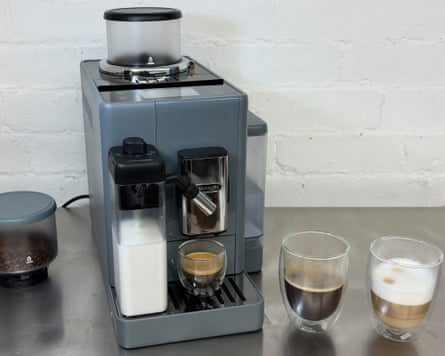
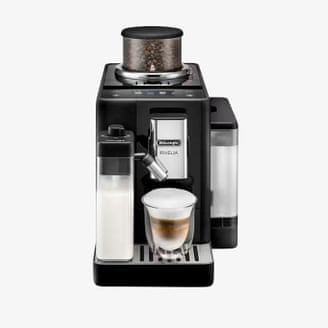
The Rivelia dares to be different. It takes the fully automatic template – making gorgeous black and white coffees at the touch of a button – and adds the ability to quickly swap between coffee beans with its two interchangeable 250g bean hoppers.
It is pricey, with an RRP of £749, but keep an eye out for the regular discounts. If your budget can stretch a little further than the Magnifica Start, this is a big upgrade for sensible cash.
Why we love it
The hoppers can be swapped in seconds. Twist the hopper to release it, and the touchscreen asks if you want to make a final drink from the coffee left in the chute, or purge it into the internal bin. Extra hoppers are £17.99 each; you can easily add a third or fourth.
The Rivelia’s slender design is less imposing than its rivals, and the touchscreen is a delight. It guides users through every step of the process, and the four individual user accounts allow everyone in the household to customise drinks to their preferences.
Crucially, the coffee is great. There’s a vast choice of short, long, milk-based and over-ice coffees here. Espresso is impressive: unlike most bean-to-cup machines I’ve tested, the finest of the 14 grind settings is so fine that it will slow the pour to a drip. That means syrupy, intense espresso is on the menu. The milk frothing is good, and you can adjust it from a light froth to a thicker, creamier foam – it’s not quite as smooth and glossy as the pricier Jura C8 below, though.
Adjustability is excellent. De’Longhi’s Bean Adapt feature adjusts the brewing settings to suit the type of beans you’re using, and the double-shot espresso does what it says on the tin – two separate brews are done one after another for an extra-strong cup. You can adjust the amount of milk froth, which is a welcome upgrade over cheaper models.
It’s a shame that … placing the colour touchscreen and buttons on the top of the machine puts the controls out of reach of inquisitive kids – but shorter people and wheelchair users will find them awkward.
Machine type: assisted bean-to-cup machine
Dimensions: 24.5 x 43 x 38.5cm (WDH)
Water tank: 1.4l
Time to heat up: 38secs
Makes milk-based drinks? Yes, automatic
Peak noise level: 51dB (brew), 51dB (steam), 68dB (grind)
Warranty: two years repair or replace at De’Longhi’s discretion
De’Longhi
Rivelia
from £593.07
What we love
Great coffee; brilliant interface; swappable hoppers
What we don’t love
Noisy grinder; milk texture could be better
Best bean-to-cup machine for simplicity:
Jura C8
What we love
Simple interface; sensible design; great coffee
What we don’t love
Only four recipes; no hot water option
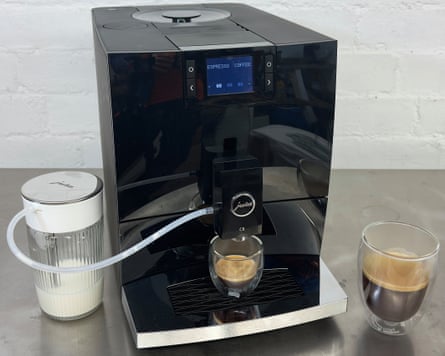
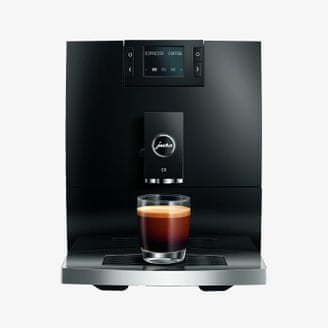
The Jura C8 offers a winning combination of simplicity, potential upgrades and good coffee. The brand’s reputation for reliability doesn’t hurt, either. Don’t pay the £899 RRP, though; shop around, and you’ll often find it below £700.
Why we love it
The design looks sleek – albeit by bean-to-cup standards – and it works well. The lack of a milk carafe seems like an oversight, but it’s not (you can buy a Jura one for £35.25, if you must) – just pop the milk tube directly into a jug or milk carton, and it’s far easier to keep clean than the nooks and crannies of a carafe. You can upgrade to a Jura milk cooler for £225 if you’re feeling flush.
Where Jura’s pricier J10 makes a huge array of drinks, the C8 settles for four: espresso, black coffee, cappuccino and frothy latte macchiato. This simplicity is matched by the controls. The C8 has a black-and-white LCD screen with buttons on either side. The screen is basic, but that works in its favour – especially if you don’t want to be bamboozled with myriad recipes or by a touchscreen.
Espresso and black coffees don’t have the depth of flavour of the De’Longhi Rivelia at its best – and bitterness overwhelms if you dial the grind size too fine – but they’re still very good. Milk texture is also excellent: it’s far smoother than the cheaper machines here.
One nice touch is that the 2x Espresso or 2x Coffee options can pour two drinks via the dual spouts – or just one larger, stronger drink if you need it.
One minor annoyance: it won’t dispense hot water. You can increase the black coffee volume to fill your preferred cup, but that simply pushes more water through the coffee and increases bitterness.
It’s a shame that … you can’t make an americano without assistance from a kettle.
Machine type: fully automatic bean to cup
Dimensions: 26 x 44 x 33cm (WDH)
Water tank: 1.6l
Time to heat up: 30secs
Makes milk-based drinks? Yes, automatic
Noise level: 50dB (brew), 47dB (steam), 65dB (grind)
Warranty: 25 months repair or replace at Jura’s discretion
Jura
C8
from £649
What we love
Simple interface; sensible design; great coffee
What we don’t love
Only four recipes; no hot water option
Best bean-to-cup machine for coffee connoisseurs:
Sage Oracle Jet
Sage
Oracle Jet
from £1,699
What we love
Stunningly good coffee; superb interface
What we don’t love
The price
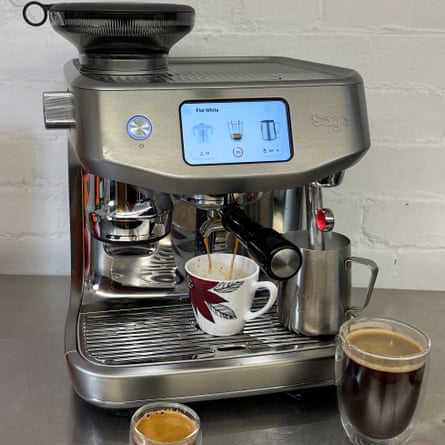
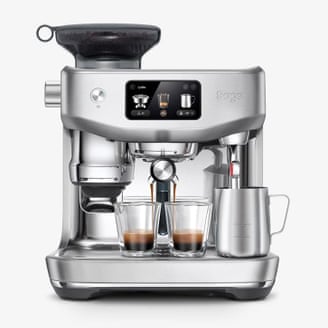
At this price, you have a choice: the finest-tasting coffee or the least amount of effort. The Oracle Jet offers the former: this is an assisted espresso machine that will give your finest independent coffee shop a real run for its money.
Why we love it
If you want the best espresso – or espresso-based drink, such as cappuccino, flat white or even americano – then the classic manual espresso machine reigns supreme. The problem is that you need to know what you’re doing: the Jet’s solution is to guide you every step of the way with a big, colourful touchscreen.
It’s more involved than a single button press, but it’s not hard – it’s actually rather exciting. Slot the portafilter into place, and the grinder thrums into action, dispensing the perfect amount of coffee while the internal fan tamps it down just so. Move the portafilter to the brew group with a thunk and a twist, tap the touchscreen, and the espresso pours forth. Congratulations, you’re a barista.
Once you have your perfect espresso, all that remains is to create some perfectly steamed milk. Fill the supplied stainless steel jug with milk – there are settings for dairy, oat, almond and soy – and the Jet whips the milk to a silky, creamy froth in just over a minute. Combine the coffee and milk, and magic awaits.
It’s a shame that … it’s expensive. For this kind of money, you’d rather hope that it’d walk up the stairs and bring you coffee in bed every morning for the foreseeable future.
Machine type: assisted espresso machine
Dimensions: 38 x 37 x 43cm (WDH)
Water tank: 2.3l
Time to heat up: six seconds
Makes milk-based drinks? Yes, auto and manual steam wand
Peak noise level: 46dB (brew), 58dB (steam), 66dB (grind)
Warranty: two-year repair, replace or refund at Sage’s discretion
For more, read our Sage Oracle Jet review
Sage
Oracle Jet
from £1,699
What we love
Stunningly good coffee; superb interface
What we don’t love
The price
Best high-end fully automatic bean-to-cup machine:
Jura J10
What we love
Huge drinks menu; great-quality coffee; easy to use
What we don’t love
Cold brew is underwhelming; very expensive
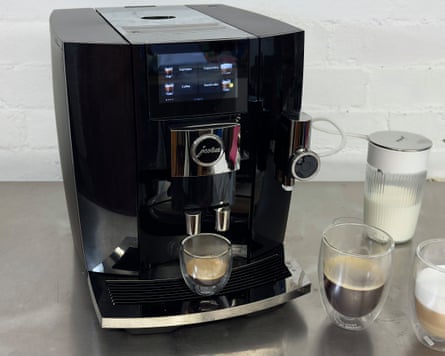
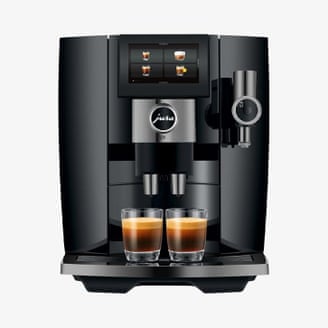
Where Jura’s C8 distils the bare essentials of the brand’s bean-to-cup coffee machines, the J10 gives a more fully featured glimpse of its high end.
Why we love it
As you’d expect for an RRP of £1,795, you get a nice bright colour touchscreen. The interface isn’t as pretty as the premium Sage alternatives, nor as intuitive, but it’s smooth and responsive. Flicking between the pages of drinks is easy, and a long press on each drink lets you fettle the recipes – of which there are 42.
All the staples are present and correct, and there’s a large menu of long, short, cold, hot, sweet and non-coffee drinks. The overall quality is great. Drinks are hot, flavourful, well-brewed and, where required, topped with a pleasingly fine microfoam. Almost every possible variety of coffee drink is on the menu, which is refreshing.
The design is classic Jura. The tall 1.9l water tank slots in snugly, and you get a single water filter in the box, which is rated to last for 50 litres or two months of use. The bottom tray slides out easily and splits into sections to make it easier to clean and dispose of used coffee grounds.
It’s a bit tightfisted of Jura not to include a milk carafe, but it’s not needed: simply pop the tube in a milk carton or jug, and it frees you from the faff of carafe scrubbing. I didn’t find the cold-brew drinks hugely impressive either – if you like the idea of the touchscreen and increased range of recipes, but can live without cold brew, save your money and step down to the Jura J8 instead.
Be in no doubt, the appeal here is the breadth of drinks, ease of use and the build quality and reliability. If you have this much to spend, though, choose carefully: if you’re willing to put in more effort, the Sage Oracle Jet makes vastly superior coffee. Think long and hard before splashing out.
It’s a shame that … cheaper models such as the De’Longhi Rivelia match it for espresso quality and breadth of drink choice. While the J10’s milk foam is tighter and creamier, the coffee isn’t better.
Machine type: fully automatic bean to cup
Dimensions: 32 × 45 x 35cm (WDH)
Water tank: 1.9l
Time to heat up: 30secs
Makes milk-based drinks? Yes, automatic
Noise level: 50dB (brew), 47dB (steam), 65dB (grind)
Warranty: 25 months repair or replace at Jura’s discretion
Jura
J10
from £1,295
What we love
Huge drinks menu; great-quality coffee; easy to use
What we don’t love
Cold brew is underwhelming; very expensive
Best value assisted machine:
Ninja Cafe Luxe ES601
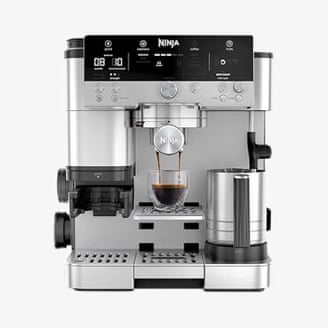
Ninja
Cafe Luxe ES601
from £449
What we love
Lots of drinks options; makes good strong coffee
What we don’t love
Results can be inconsistent; reliability issues
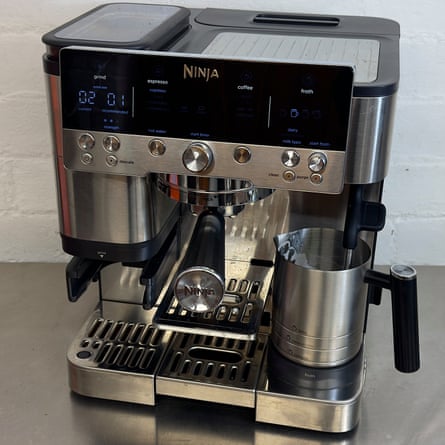
This is Ninja’s most affordable assisted espresso machine. For about £549 (RRP), the ES601UK serves everything from espresso to flat white, and cold brew to filter coffee. You have to lend a helping hand, but the automatic grind adjustment and automatic milk frothing mean that you don’t need to know what you’re doing.
Why we love it
The versatility is impressive. Ninja supplies three baskets for the portafilter – single, double and quad – allowing it to brew everything from a single espresso to a brain-tingling quad espresso to a filter-style coffee with a coarser grind.
Milky coffee drinkers aren’t left out in the cold, either – well, not unless they want to be. The ES601UK’s proprietary milk jug uses a little whisk to froth up cold milk as easily as it steams and froths hot milk.
The big selling point isn’t just the range of coffee drinks it produces. The clincher is that, at its best, it can produce a stronger, better espresso or milk-based coffee than the fully automatic models here. And, as long as you feed it good-quality coffee beans, it’s not that much effort to do so.
While it’s far easier to use than a manual espresso machine, it’s not zero effort. The built-in grinder advises on the grind size and grinds the right amount every time, but you need to adjust this manually as instructed, press down the coffee grounds with the supplied tamper and slot the portafilter into place.
Consider the step-up ES701 UK model. This swaps the manual tamping for a big lever that makes the process feel more immediate. If you’re on the fence between a fully automatic and an assisted espresso machine, it may swing the deal.
It’s a shame that … consistency is iffy. Coffee and milk temperature can vary, and my review unit started to overheat the milk after a few months. The two-year warranty is welcome.
Type: assisted
Dimensions: 34 x 35 x 38cm (WDH)
Water tank: 2l
Time to heat up: 35secs
Makes milk-based drinks? Yes
Noise: 48dB (brew), 58dB (steam), 63dB (grind)
Warranty: two years
Ninja
Cafe Luxe ES601
from £449
What we love
Lots of drinks options; makes good strong coffee
What we don’t love
Results can be inconsistent; reliability issues
The best of the rest
Philips LatteGo 5500
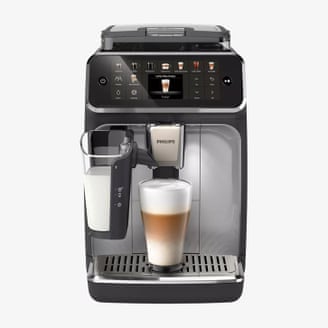
Philips
LatteGo 5500
from £530
What we love
Easy to use; easy to clean
What we don’t love
Plasticky build; average coffee; mediocre milk frothing
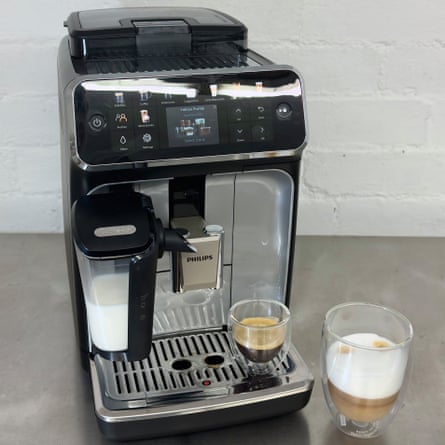
Best for: ease of use
The LatteGo 5500 is one of Philips’ more upmarket models. The design looks good – and it’s practical. The 25cm width is a tad narrower than many machines, and that means it will slot into gaps on the worktop easily.
The Quiet Mark certification is welcome. The rubber-sealed bean hopper lid doesn’t just keep the beans fresher, it also makes for the quietest grinding noise here. Brewing and steaming are similar to the other models, though.
The controls work well. Nice, clear touch-sensitive buttons are adorned with drinks icons, and the colour touchscreen makes it quick and easy to adjust the drinks settings, from strength to size. Four colour-coded user accounts allow different people to set their own drink preferences, too.
For the money, though, the De’Longhi Rivelia feels more solidly built and makes a far better coffee. The LatteGo’s light plasticky build is one disappointment, but the drinks could be better, too. The espresso at default settings is watery; you can improve it by grinding finer and making a smaller shot, but it still doesn’t match the De’Longhi models here.
The milk carafe design is wonderfully simple, but it creates a coarse, bubbly froth that’s bettered by the more affordable Magnifica Start. That it doesn’t prompt you to attach the milk frother is silly, too – forget to do so, and it just spurts steam all over the drip tray and worktop.
It didn’t make the final cut because … you can get better-quality coffee for less.
Machine type: fully automatic bean to cup; dimensions: 25 x 44 x 37cm (WDH); water tank: 1.8 litres; time to heat up: 45secs; makes milk-based drinks? Yes, automatic; peak noise level: 58dB (brew), 64dB (steam), 63dB (grind); warranty: two years
Philips
LatteGo 5500
from £530
What we love
Easy to use; easy to clean
What we don’t love
Plasticky build; average coffee; mediocre milk frothing
Melitta Latte Select
Melitta
Latte Select
from £374
What we love
Strong espresso and really hot coffees
What we don’t love
Clunky interface; split hopper is flawed
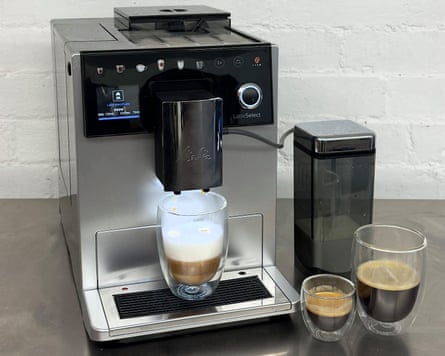
Best for: dual hoppers and hot, strong coffees
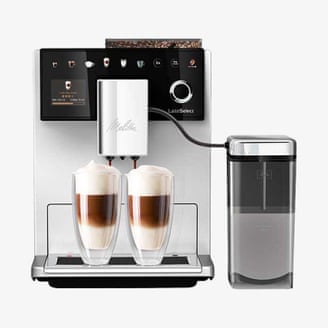
The Melitta Latte Select’s fully automatic design is reminiscent of Jura’s models – I suspect it’s built by the same OEM manufacturer – and serves 12 coffee recipes. The party trick? You can switch between two types of beans with the flick of a lever.
The split hopper is a mediocre design. The lever tilts a plastic gate to open or close the left- and right-hand sides of the hopper, but beans tend to slip through the gaps when it’s full. It works – but 100% effective it is not.
Still, it makes a mean coffee. The Latte Select uses larger doses of coffee than some of the other machines here; coffee temperature is hotter than average, and brewing temperature is adjustable. The result is that espresso is downright potent at the maximum strength setting, and the milk-based coffees are tasty, with a good, creamy milk foam.
The plastic milk carafe connects via a little rubber tube, but just like the Jura machines, you don’t have to use it – you can plonk the tube directly into a milk bottle or jug.
The body and parts feel light and plasticky; the hollow-sounding clunks and whirrs are a touch louder than its rivals, and the controls are fiddly.
It didn’t make the final cut because … the drink buttons are sensitive and easily pressed by accident.
Machine type: fully automatic bean to cup; dimensions: 26 x 48 x 35cm (WDH); water tank: 1.8 litres; time to heat up: 52secs; makes milk-based drinks? Yes, automatic; peak noise level: 53dB (brew), 57dB (steam), 67dB (grind); warranty: two years
Melitta
Latte Select
from £374
What we love
Strong espresso and really hot coffees
What we don’t love
Clunky interface; split hopper is flawed
Gaggia Cadorna Plus
Gaggia
Cadorna Plus
from £549
What we love
Good coffee; multiple user accounts; manual steam wand
What we don’t love
Clunky design; noisy operation
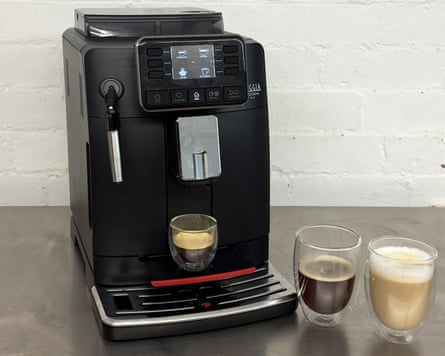
Best for: super-hot manual milk frothing
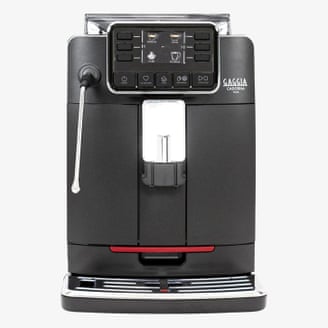
The Cadorna does lots of things well. The chunky-looking control panel is easy to navigate, and it’s refreshing to have big, solid buttons to press rather than a touchscreen. User profiles are another boon, as everyone can customise the drink recipes to their tastes.
Espresso is good and strong – that makes the base for a great coffee, black and white. The simple interface plays a crucial part here: you can adjust shot volume, temperature and strength quickly and easily without consulting the user manual, which makes it easy to get a perfect shot.
Milk frothing is a manual affair, but it’s not hard. Grab your nearest metal milk jug, half fill it with milk, and dip the steam wand just below the surface. If you prefer your milk hotter, you can just leave it in a little longer and keep steaming. You still don’t get silky, perfect microfoam, though – it’s thick and frothy, and too coarse and stiff to create any latte art. You’ll need a proper manual wand for that.
It’s not the most handsome-looking or solid-feeling machine, either. It’s chunky and plasticky, and the 1.5-litre water tank and grounds bin clunk in and out inelegantly. It’s noisy, too.
It didn’t make the final cut because … it’s just too pricey at full price, and the manual milk frothing will appeal only to those who demand lip-scorchingly hot milky coffees.
Machine type: semi-automatic bean to cup; dimensions: 26 x 44 x 38cm (WDH); water tank: 1.5l time to heat up: 28secs; makes milk-based drinks? Yes, manual steam wand; peak noise level: 58dB (brew), 52dB (steam), 69dB (grind); warranty: five years on parts (including two years parts and labour)
Gaggia
Cadorna Plus
from £549
What we love
Good coffee; multiple user accounts; manual steam wand
What we don’t love
Clunky design; noisy operation
What you need to know
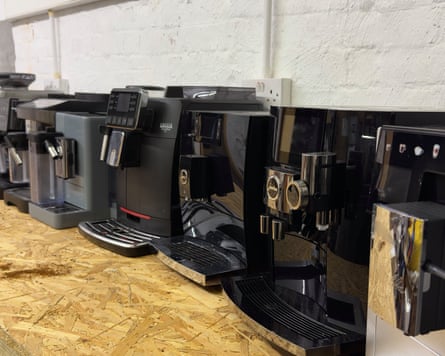
What kinds of bean-to-cup machines are there?
Well, there are lots. The tricky bit for buyers is that, rather unhelpfully, manufacturers have a broad definition of bean-to-cup, and they apply the term to a range of machines with a varied array of abilities. One thing they do all have in common is a bean hopper up top, which can be filled with coffee beans. Yes, they all brew coffee, but while some serve a milk-based coffee with a single press of a button, others require more effort.
Below, I’ve summarised the pros and cons of the three main types of bean-to-cup machines on the market in 2026, and given insight as to what they do differently.
Fully automatic or superautomatic
Pros: Easiest to use
Cons: Can be expensive
If you can see a milk carafe – or a milk tube – poking out of the side of a machine, then it’s almost certainly a superautomatic. As long as you keep the water tank, milk carafe and bean hopper topped up, one prod of a finger will summon a milk-based coffee – such as a cappuccino or flat white. Pricier models may provide more preset drink recipes (including cold brew), adjustable milk froth levels or the ability to swap between two types of coffee beans.
Semi-automatic
Pros: Normally cheaper; milk foam can be better
Cons: More hassle
Semi-automatic bean-to-cup machines (confusingly referred to as automatic sometimes) require you to steam your milk manually with a steam wand. They serve espresso – and often long blacks or americanos – at the press of a button, but you’ll need to hold a steel jug of milk under the steam wand to create hot milk. Up your budget, and models with “pro” wands will create cafe-quality microfoam – if, that is, you have good technique. Most, however, use auto-frothing wands, which create a looser, more bubbly foam with minimal effort.
Assisted espresso machines
Pros: Best coffee and superior milk texture
Cons: Require more effort
You’ll see manufacturers call these bean-to-cup machines, but they’re more involved than their semi- and fully automatic cousins. The more you spend, the more assistance you’ll get. Top-flight models hold your hand tightly: put the portafilter under the grinder, and they’ll grind the coffee and press it down, leaving you to move the portafilter to the brew group and press a button. If the grind is too coarse, or too fine, they’ll prompt you to adjust it. Similarly, they froth milk to perfection: just put a jug of cold milk under the steam wand. For coffee quality, they trounce their automatic rivals, but effortless they are not.
For more:
The best coffee machines for your home – tested
How to make your coffee machine last longer
Everything you need to make great coffee
Sasha Muller is a tech and consumer journalist, avid coffee drinker and craft beer enthusiast with more than two decades of experience in testing products and avoiding deadlines. If he’s not exploring the local woods with his kids, boring people talking about mountain-bike tyres or spending ill-advised amounts on classic drum’n’bass vinyl, he’s probably to be found somewhere swearing at an inanimate object