.png) 3 months ago
83
3 months ago
83
There’s an Irish saying, tír gan teanga, tír gan anam: a country without a language is a country without a soul. Representatives of some of Europe’s estimated 60 minority languages – or minoritised, as they define them – met in Barcelona recently to discuss what it means to lose a language, and what it takes to save it.
Language diversity is akin to biodiversity, an indicator of social wellbeing, but some of Europe’s languages are falling into disuse. Breton, for example, is dying out because its speakers are dying, and keeping languages alive among young people is challenging in an increasingly monolingual digital world.
Catalan, which is spoken by about 10 million people, is the poster child of successful minoritised languages. Thanks to decades of linguistic immersion in public education, from nursery to university, about 93.4% of the population can speak or understand Catalan, in addition to Spanish. Both are co-official languages in Catalonia, and the result is a culture that is almost completely and unselfconsciously bilingual.
However, the latest figures show that only 32.6% of adults say Catalan is the language they habitually use, and the numbers are falling, especially among younger people. Not without reason, many Catalans view the language as being in constant danger of being engulfed by Spanish (and, increasingly, by English too). One consequence of this concern is a tendency to treat Catalan more as a sacred, unalterable cultural artefact than a living language.
In addition to regular subeditors, Catalan media employ “correctors” – effectively a language police, who stamp out any perceived impurities, word play or neologisms from broadcast or published output. The result is that the language can seem stiff and uncool, which partly accounts for its declining use among young people.
“I speak a Valencian dialect of Catalan and it annoys me that people correct me, as though we all have to speak some perfect version of the language,” said Blanca Trull Armengol of the European Language Equality Network (ELEN), who organised the Barcelona conference. “It’s a living language, and just because we introduce words from other languages it shouldn’t be seen as some form of contamination.”
Frisian is the mother tongue of Mirjam Vellinga, along with about 500,000 people in the northern Netherlands. She is a firm advocate of letting people indulge their creativity with the language, rather than bowing to a purist doctrine. “If it means introducing some Dutch or English, that’s fine,” she told me. “We don’t want to put it in a museum. When we lose a language, we lose a way of being and the connection with our ancestry. When people’s language is suppressed you see more depression and ill health because you’ve been robbed of part of your identity.”
In a world increasingly dominated by identity politics, Vellinga added, some young people see speaking Frisian as a marker of cool. “There are rock bands that sing in Frisian, but we don’t have a Kneecap unfortunately. We’re a bit jealous of Kneecap.”
Rappers Kneecap are a key part of why Irish is riding the crest of a wave, with a big increase in people choosing to study the language at all levels of education. “Kneecap are rooted in the reality of young people,” says Conchúr Ó Muadaigh of Irish language association Conradh na Gaeilge. “Kneecap reflect the life and diversity of young people through the medium of Irish. But it’s not an academic language. Young people in their thousands are gravitating to them because of their authenticity.”
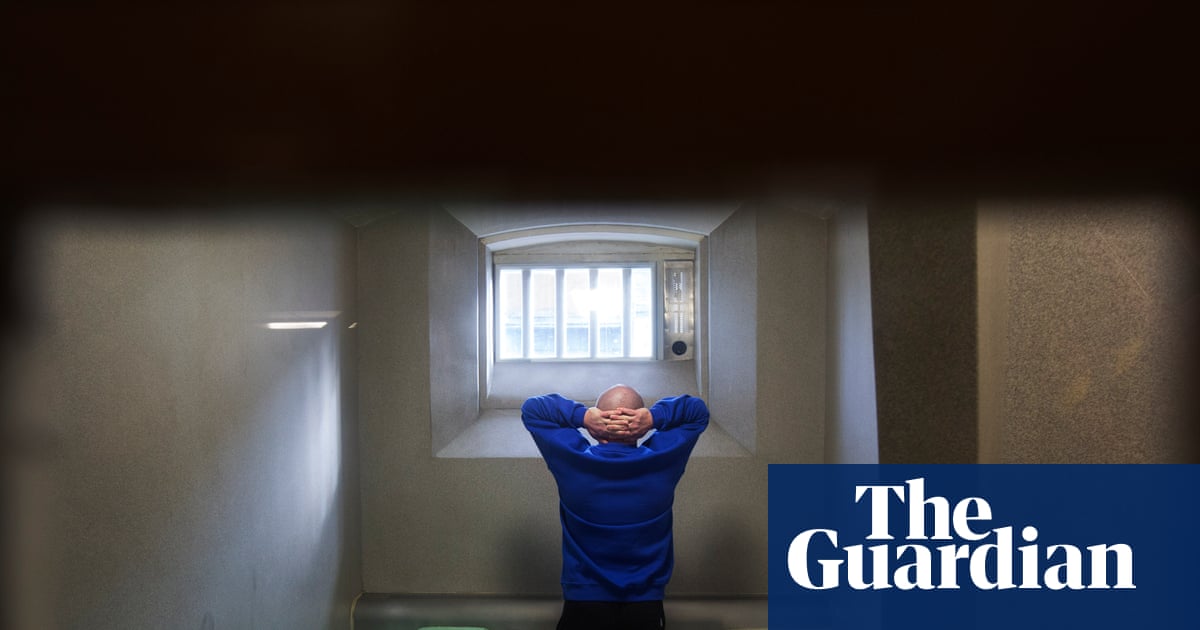
In the Republic, about 1.9 million people can speak Irish; it is in daily use by about 624,000. The language received an unexpected boost during the Troubles in Northern Ireland when Republican prisoners took to learning it, in what became known as the Jailtacht, a play on Gaeltacht, the Irish-speaking regions of Ireland.
When the prisoners were released under the Good Friday agreement in 1998, many went into education and community activism and Irish began to flourish north of the border, where before it had been virtually extinct. In the Gaeltacht in the west of Ireland, however, the language is in decline, partly as a result of the huge rise in the demand for holiday homes forcing young people to leave.
This view is echoed by ELEN’s president, Elin Haf Gruffydd Jones, who says depopulation in rural areas is leading to a decline in the Welsh language in some parts of the country. “If you don’t have proper investment, you’re going to have depopulation, young people moving away, and if other people with more capital are buying second homes, you have a complete mismatch,” Jones says. “What we see is that wealth inequality equates with lack of language equality.”
after newsletter promotion
One success story has been the rise of the Basque language, Euskera, which, like Catalan, was suppressed under the Franco dictatorship. In Spain’s Basque region, parents can choose between three educational models: 100% Spanish, 50% Spanish and Euskera or 100% Euskera. Close to 90% of the population opt for the full Euskera model.
Euskera is an ancient tongue, unrelated to any of the 100 or so Indo-European languages, and linguists continue to puzzle over its origins. However, to Manex Mantxola Urrate of the Euskera language association Kontseilua, that’s not the point.
“To us, the mystery isn’t where it came from or when, but how it managed to get to where it is today, despite the hegemonic French and Spanish states, and the answer is because of an enduring sense of community,” he says. “What we need to protect is ourselves, it’s we who are in danger. We don’t have to save the language, the language is what will save us.”
Clearly languages that are spoken by as many as 10 million people are very much alive, and a Eurobarometer survey last year showed that 84% of Europeans support the EU’s minority languages. However, their limited presence on digital and social media threatens to increase their marginalisation. If they are to continue to evolve, the Kneecap effect suggests that the gatekeepers dedicated to maintaining their purity need to loosen their grip, and let these languages live a little.
-
Stephen Burgen is a freelance writer who reports on Spain